
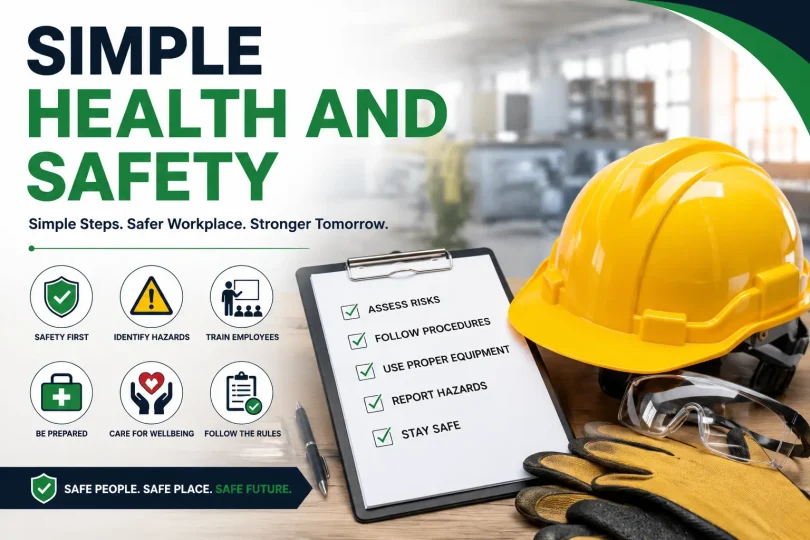

Simple health and safety is the basic set of practices a workplace needs to protect people from harm and stay within the law. For a small or low risk business, it usually comes down to nine things: a short written policy, a risk assessment, worker training, a way to report accidents, welfare facilities, first aid provision, a displayed safety notice, a named responsible person, and regular review. You do not need a safety department or a certified system to cover the basics. You need consistency.
If you search for “simple health and safety,” you are probably trying to answer one of three questions: what does it actually mean, what is the minimum I legally need to do, or how do I put a basic system together without hiring a consultant. This guide answers all three in plain language.
What Is Simple Health and Safety?
Simple health and safety refers to the essential, non-technical practices that keep a workplace free from foreseeable harm. It is the version of occupational safety built for small businesses, low risk environments, and anyone who needs to meet their legal duty without building a full enterprise safety management system.
The UK’s Health and Safety Executive frames it exactly this way. Its official guidance states that for a small, low risk business, a handful of basic steps may be all that is needed to comply with health and safety law, covering policy, risk assessment, accident reporting, training, worker consultation, facilities, first aid, and appointing someone competent to manage it all.
In short, simple health and safety is not a watered down version of “real” safety management. For most small workplaces, it is the complete, legally sufficient version.
Why Simple Health and Safety Matters
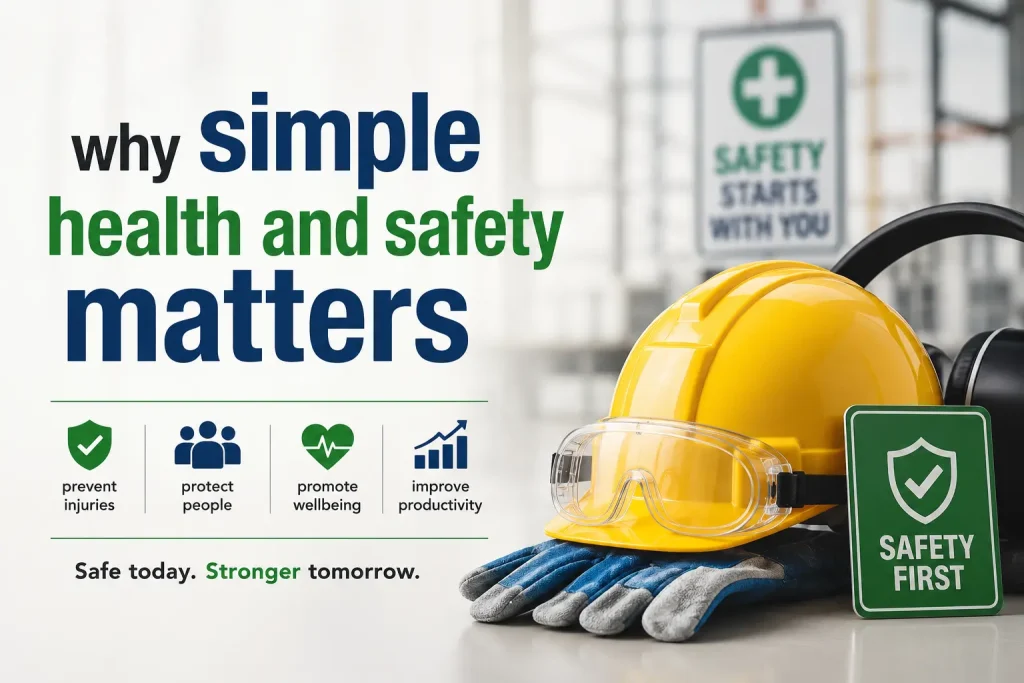
The financial and human cost of skipping the basics is larger than most business owners expect.
- According to the Liberty Mutual 2025 Workplace Safety Index, US businesses spend more than 1 billion dollars per week on workplace injuries, adding up to over 58 billion dollars a year, with the top ten injury causes making up 86.5 percent of that total.
- Bureau of Labor Statistics fatality data shows that a worker in the United States died from a work related injury roughly every 104 minutes in 2024.
- Since the US Occupational Safety and Health Act took effect in 1970, workplace fatalities have dropped by more than 65 percent, and injury and illness rates have fallen by roughly 67 percent, according to OSHA’s own program data.
- A 2026 workplace safety survey from EcoOnline found that 92 percent of workers said a safer workplace makes them more productive, and 78 percent said they would consider leaving a job they felt was unsafe.
These numbers point to the same conclusion from two directions. Ignoring simple health and safety is expensive and dangerous. Getting the basics right pays for itself in fewer injuries, lower costs, and staff who actually want to stay.
The 9 Core Elements of Simple Health and Safety
This is the practical foundation. If your workplace covers all nine, you have a functioning simple health and safety system, regardless of your industry.
1. A Short Written Safety Policy
State who is responsible, what your commitments are, and how those commitments get carried out. One page is enough for most small businesses.
2. Risk Assessment
Walk through your workplace, identify what could realistically cause harm, and note what you are already doing to control it. This single step catches the majority of preventable incidents.
3. Reporting Accidents and Ill Health
Certain injuries, dangerous near misses, and work related illnesses must be logged and, in many cases, reported to a regulator such as HSE or OSHA.
4. Information and Training
Workers need to know the hazards specific to their job and how to avoid them, not generic safety advice. Training should happen at induction and get refreshed when tasks or equipment change.
5. Worker Consultation
The people doing the job daily usually spot hazards before management does. Build a simple, low pressure way for them to raise concerns.
6. Workplace Welfare Facilities
Clean toilets, washbasins, drinking water, and a rest area are a legal minimum in most countries, not optional extras.
7. First Aid Provision
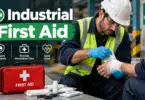
A stocked kit and at least one trained first aider, scaled to the size and risk level of your workplace.
8. Displaying Safety Information
A visible poster or leaflet telling workers their rights and who to contact if something goes wrong.
9. A Named Competent Person
Someone in the business, even in a company of five, needs to own health and safety. In a low risk workplace, this does not require a certified safety professional, just someone capable enough to manage the basics and know when to call in outside help.
Simple Health and Safety Checklist
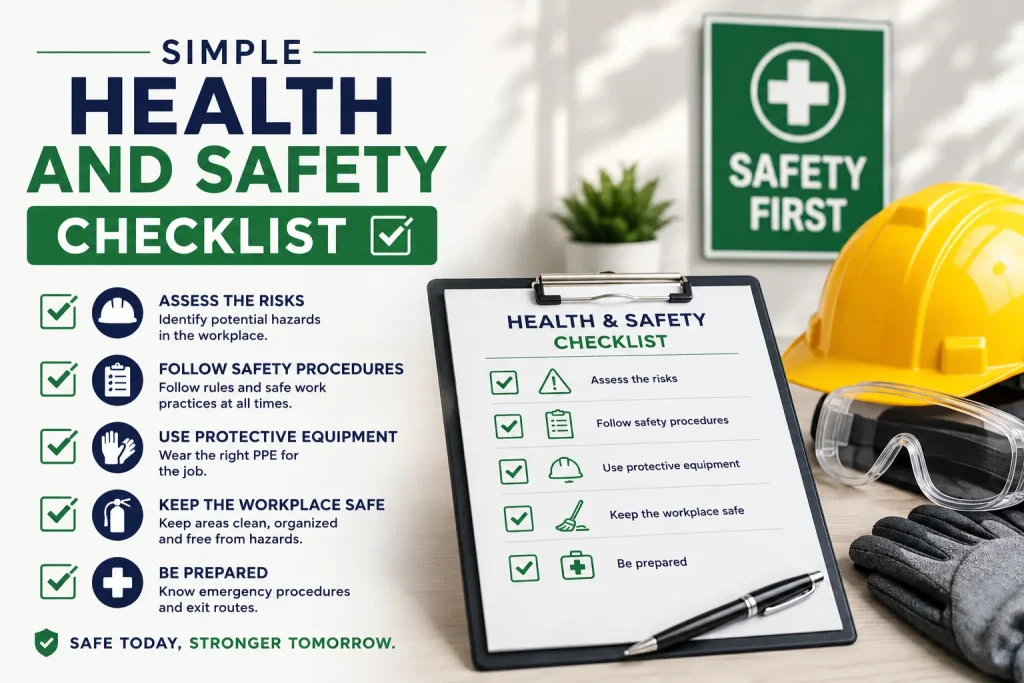
Use this as a fast self-audit. If you can tick most of these, your basics are in place.
- Written safety policy exists and is dated within the last 12 months
- Risk assessment completed for all major work areas
- All new hires receive safety induction before starting work
- Accident and near miss log is up to date
- First aid kit is stocked, in date, and accessible
- At least one trained first aider is on site during working hours
- Fire exits are clear and exit signage is visible
- PPE is available, in good condition, and actually being worn
- Safety poster or leaflet is displayed or distributed
- One named person is responsible for health and safety
Common Workplace Hazards Behind Most Incidents
Understanding hazard categories helps you prioritize where simple health and safety efforts should go first.
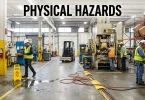
Physical Hazards
The leading cause of workplace injury. Falls, moving machinery, extreme temperatures, high noise, and poor ergonomic setup all sit here. A cluttered floor or unguarded machine is often the first visible sign that a safety routine has slipped.
Chemical and Biological Hazards
Often invisible and slower to show effects. Flammable, corrosive, or toxic substances, along with biological risks like viruses, bacteria, or mold, require ventilation, correct labeling, and decontamination procedures.
Mental and Psychosocial Hazards
Excessive workload, poor management, and toxic team dynamics contribute to burnout and chronic stress. Regulators increasingly treat this as a genuine occupational hazard rather than a separate HR issue.
10 Simple Safety Rules for Any Workplace
- Keep work areas clean and clear of clutter or spills.
- Wear the correct PPE, and make sure it actually fits.
- Know your fire exits and keep them unobstructed at all times.
- Store hazardous materials with proper labels and ventilation.
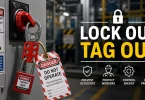
- Follow lockout and tagout procedures before servicing machinery. Industry enforcement data compiled by the American National Standards Institute shows this remains one of the most frequently cited violations worldwide, accounting for over 11 percent of all citations in recent years.
- Take scheduled breaks and stay hydrated in hot conditions.
- Report hazards and near misses immediately, without waiting for a formal review.
- Attend safety training as a real requirement, not a formality.
- Use proper fall protection at height. The same enforcement data shows fall protection is consistently the single most cited safety violation across industries, making up roughly 30 percent of all citations.
- Treat these rules as daily habits, not a checklist for inspection day only.
Simple Health and Safety for Small Businesses vs. Larger Organizations
| Factor | Small / Low Risk Business | Larger or Higher Risk Business |
|---|---|---|
| Safety policy | One page, informal | Multi-section, formally reviewed |
| Risk assessment | Basic walkthrough | Structured, documented, industry specific |
| Responsible person | Owner or manager | Dedicated safety officer or team |
| Standards followed | National minimum guidance (HSE or OSHA basics) | Often certified to ISO 45001 or sector standards |
| Training | Induction plus informal refreshers | Scheduled, tracked, role specific programs |
A five person retail shop and a two hundred person manufacturing plant both need the same nine core elements. What changes is the scale and formality, not the underlying principles.
The Legal Frameworks Behind Simple Health and Safety
Regulations differ by country, but the intent is the same everywhere: prevent harm before it happens.
United States. The Occupational Safety and Health Act requires employers to keep workplaces free of recognized hazards. OSHA enforces this through inspections and penalties, and guarantees worker rights including safe conditions, proper training, necessary protective equipment, and the right to refuse genuinely unsafe work without retaliation.
United Kingdom. The Health and Safety Executive provides a simplified compliance path for low risk businesses, built around the nine core elements covered above, so smaller employers can meet their legal duty without an elaborate management system.
International. The International Labour Organization sets conventions on working hours, minimum age, and safe conditions that member states build national law around. On the standards side, ISO 45001 gives organizations a certifiable, structured framework for managing occupational health and safety risk, and is increasingly requested in supplier contracts and tenders.
How to Build a Simple Health and Safety Plan in 6 Steps
- Walk your workplace and list hazards. Look at tasks, equipment, and layout.
- Rank hazards by risk. Fix the most likely and most severe issues first.
- Write short, specific rules for the top risks. Skip the lengthy manual approach.
- Train your people on the hazards that actually exist in your workplace.
- Create a simple, blame free reporting channel. A shared form or a message to a supervisor works fine.
- Review the plan at least yearly, and immediately after any incident, near miss, or equipment change.
Frequently Asked Questions
What is simple health and safety?
It is the basic set of legally required practices, covering policy, risk assessment, training, first aid, and welfare facilities, that a small or low risk workplace needs to stay safe and compliant without a complex management system.
Is a formal safety policy required for a small business?
Yes, but it can be short. HSE guidance confirms that a one page document naming who is responsible and outlining basic procedures satisfies most legal minimums for low risk workplaces.
How often should a risk assessment be updated?
At minimum once a year, and immediately after any incident, new equipment, or change in how work is done.
Is mental health part of workplace safety?
Increasingly yes. Chronic stress and excessive workload are now recognized as genuine occupational hazards by major safety frameworks, not separate HR concerns.
What is the difference between a safety policy and a safety procedure?
A policy states your overall commitment and who owns it. A procedure gives step by step instructions for a specific task. Simple health and safety needs both, but the procedure is where actual risk gets reduced.
Final Thoughts
Simple health and safety is not a scaled down compromise. For most small and low risk workplaces, it is the complete answer to what the law actually requires: a clear policy, a real risk assessment, trained workers, basic facilities, and one person who owns the process. Get those nine pieces right and keep reviewing them, and you have a workplace that is genuinely, legally, and practically safe.
You May Also Like It:
Industrial Robot Safety: The Complete 2026 Guide for Facilities, Engineers & Safety Managers
Safety Topics: Guide to OSHA Safety Topics, Toolbox Talks, and Meeting Ideas
Industrial Safety Signs: The Complete Guide to Types, Meanings, Colors, and Standards
Safety Equipment Supplier: The Complete Buyer’s Guide for US Businesses
Sources
- UK Health and Safety Executive — Health and safety basics for your business (hse.gov.uk/simple-health-safety)
- Liberty Mutual — 2025 Workplace Safety Index
- US Bureau of Labor Statistics — Census of Fatal Occupational Injuries, 2024
- US Occupational Safety and Health Administration — Safety Management: Recommended Practices for Safety and Health Programs (osha.gov/safety-management)
- EcoOnline — North America 2026 Workplace Safety Report
- American National Standards Institute — OSHA 2024 Top 10 Violations Analysis
- International Labour Organization — founding conventions and Declaration of Philadelphia
- ISO — ISO 45001: Occupational Health and Safety Management Systems

[…] satisfies legal and regulatory obligations. In the United States, the Occupational Safety and Health Administration (OSHA) requires many employers to maintain a written emergency action plan, and […]
[…] the United Kingdom the Health and Safety Executive (HSE) doesn’t mandate a fixed list of kit contents either. Instead, employers are […]
[…] just repeat the same material for longer. It adds an entire mandatory module called Managing Safety and Health, which walks supervisors through job site inspections, injury and illness prevention programs, and […]