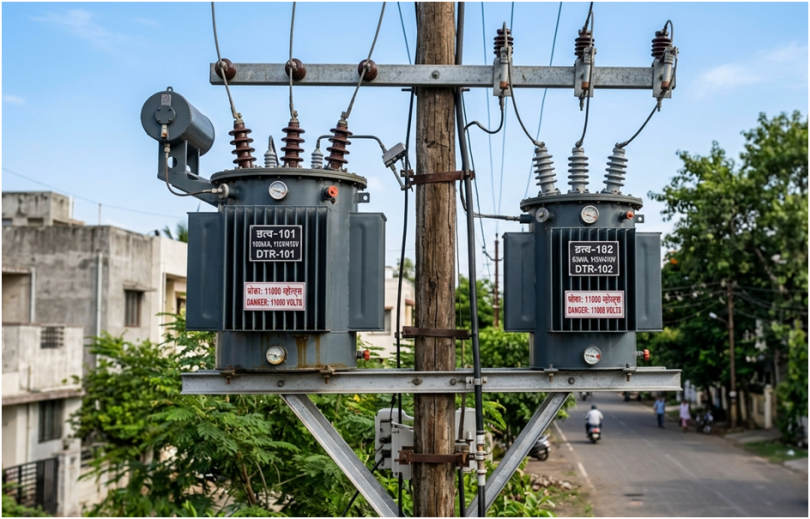

Every time you flip a light switch, charge a phone, or start a washing machine, you are relying on a piece of equipment that most people never notice: the distribution transformer. These devices sit on utility poles, inside green pad-mounted boxes on the ground, or in underground vaults near homes and businesses. Their job is simple to describe but essential to modern life they take the medium-voltage electricity carried on distribution lines and step it down to the lower voltage that is safe to use in homes, offices, and factories.
This article explains what distribution transformers are, how they work, the different types available, and what factors matter when selecting, installing, and maintaining them.
What Is a Distribution Transformer?
A distribution transformer is an electrical device that converts electricity from one voltage level to another, typically reducing medium voltage (usually between 2,400 and 35,000 volts) down to a lower voltage suitable for end use, such as 120/240 volts for a residential home or 208/480 volts for a commercial building.
Transformers do not generate power. They simply change the voltage and current relationship of electricity that is already flowing through the system, using a principle called electromagnetic induction. This makes them passive devices with no moving parts under normal operation, which is part of why they can operate reliably for decades.
Distribution transformers are the final link in the chain between the power plant and the electrical outlet. Power is generated at one voltage, stepped up for efficient long-distance transmission, stepped down at substations for regional distribution, and finally stepped down again by a distribution transformer close to the point of use.
How a Distribution Transformer Works
At its core, a transformer consists of two or more coils of insulated wire, called windings, wrapped around a shared iron core.
- The primary winding receives the incoming higher-voltage electricity.
- The secondary winding delivers the reduced voltage to the customer.
When alternating current flows through the primary winding, it creates a changing magnetic field in the iron core. This changing magnetic field induces a voltage in the secondary winding. The ratio of the number of turns of wire in each winding determines how much the voltage is stepped up or down. A winding ratio of 20:1, for example, would reduce 4,000 volts on the primary side to 200 volts on the secondary side.
Because there is no direct electrical connection between the primary and secondary windings, the transformer also provides a degree of electrical isolation, which is an important safety feature.
Common Types of Distribution Transformers
Not all distribution transformers look or function the same way. The right type depends on the environment, the load being served, and local safety requirements.
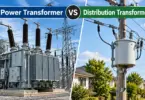
Pole-Mounted Transformers These are the cylindrical, can-shaped units seen mounted on utility poles in overhead distribution systems. They are compact, cost-effective, and commonly used in residential neighborhoods where overhead lines are already in place.
Pad-Mounted Transformers Used in areas with underground distribution systems, these transformers sit inside locked, tamper-resistant steel enclosures at ground level. They are common in newer residential developments, commercial parks, and areas where overhead lines are not permitted for aesthetic or safety reasons.
Underground (Vault-Type) Transformers Installed in below-ground vaults, these units are used in dense urban environments where space is limited and equipment must be hidden from view entirely.
Dry-Type Transformers Rather than being cooled with oil, dry-type transformers use air for cooling and insulation. They are often chosen for indoor installations, such as inside commercial buildings or parking structures, because they carry a lower fire risk than oil-filled units.
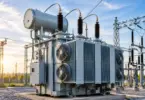
Liquid-Filled (Oil-Immersed) Transformers These use mineral oil or alternative dielectric fluids to cool the windings and provide electrical insulation. Oil-filled transformers are widely used outdoors because the liquid offers excellent cooling and insulating performance, though they require containment and spill-prevention measures.
Key Ratings and Specifications
When selecting a distribution transformer, several specifications determine whether it is suitable for a given application:
- kVA Rating: This indicates the transformer’s capacity, measured in kilovolt-amperes. It reflects how much load the transformer can handle without overheating.
- Primary and Secondary Voltage: These must match the incoming distribution voltage and the required output voltage for the connected load.
- Impedance: This affects how the transformer responds to short circuits and influences how it interacts with other equipment on the system.
- Insulation Class and Basic Insulation Level (BIL): These determine the transformer’s ability to withstand voltage surges, such as those caused by lightning strikes.
- Efficiency Rating: Modern transformers are designed to minimize energy loss during operation, which matters both for cost savings and for meeting regulatory efficiency standards.
Selecting a transformer with the wrong rating can lead to overheating, premature failure, or an inability to handle peak loads, so this step typically involves careful load calculations by a qualified engineer.
Losses and Efficiency
No transformer converts electricity with perfect efficiency. Some energy is always lost as heat, primarily in two forms:
- No-load (core) losses occur continuously whenever the transformer is energized, even if no load is connected, due to the magnetization of the core.
- Load losses occur as current flows through the windings and increase as the load increases.
Because distribution transformers often run continuously for years, even small efficiency improvements can produce meaningful energy savings across a utility’s entire fleet. This is why many regions have adopted minimum efficiency standards for new transformers, encouraging the use of improved core materials and winding designs.
Installation and Safety Considerations
Distribution transformers must be installed and maintained in accordance with applicable electrical codes and utility standards. A few general principles apply across most installations:
- Proper grounding is essential to protect people and equipment from fault currents.
- Clearances from buildings, walkways, and vegetation must meet code requirements to reduce fire and contact hazards.
- Ventilation matters for both dry-type and oil-filled units, since inadequate airflow can accelerate insulation aging.
- Regular inspection helps catch early signs of trouble, such as oil leaks, unusual noise, or discoloration from overheating.
- Load monitoring helps ensure the transformer is not consistently operating near or above its rated capacity, which shortens its service life.
Because distribution transformers carry potentially lethal voltages, all installation, maintenance, and repair work should be performed only by trained and qualified electrical personnel following lockout/tagout and other established safety procedures.
Maintenance and Lifespan
With proper care, a distribution transformer can operate reliably for 25 to 40 years or more. Maintenance practices that support this lifespan include:
- Periodic visual inspections for leaks, corrosion, or physical damage
- Oil testing (for liquid-filled units) to check for moisture contamination or insulation breakdown
- Infrared thermal scanning to identify hot spots caused by loose connections or overloading
- Cleaning of bushings and enclosures to prevent tracking and contamination buildup
- Monitoring of ambient temperature and loading patterns, particularly in areas with seasonal demand spikes
Utilities and facility managers increasingly use condition-based maintenance, relying on data and testing results rather than fixed schedules alone, to decide when a transformer needs service or replacement.
The Role of Distribution Transformers in a Changing Grid
As electrical grids evolve to accommodate rooftop solar, electric vehicle charging, and battery storage, distribution transformers are being asked to handle more variable and, in some cases, higher loads than in the past. This has led to renewed attention on:
- Right-sizing transformers for future load growth, not just current demand
- Improving monitoring capabilities so utilities can detect overloading or failure risk earlier
- Considering resilience against extreme weather, since distribution equipment is often the most exposed part of the grid
While the basic physics of transformation has not changed, the way distribution transformers are specified, monitored, and maintained continues to evolve alongside the broader electrical system.
Conclusion
Distribution transformers may not attract much attention, but they are one of the most essential components of the electrical grid. By safely and efficiently stepping down voltage for practical use, they make it possible to power homes, businesses, and industries every single day. Understanding how these devices work, the types available, and the standards that govern their design and maintenance is valuable knowledge for anyone working in or around the electrical industry — from field technicians to facility managers to engineers planning the grid of the future.