
Last updated: October 19, 2026
Most people notice electrical protection only when a breaker trips or a fuse blows. That interruption is inconvenient, but it is often the system doing its job. A damaged cord, an overloaded circuit, a faulty appliance or a deteriorating wire can create conditions that lead to electric shock, overheating or fire, and protective devices exist to cut power before that happens. This guide explains the main types of electrical fault protection in a home, how each one works, how to test them, what the building code expects, and when to call a licensed electrician.
What Is Electrical Fault Protection?
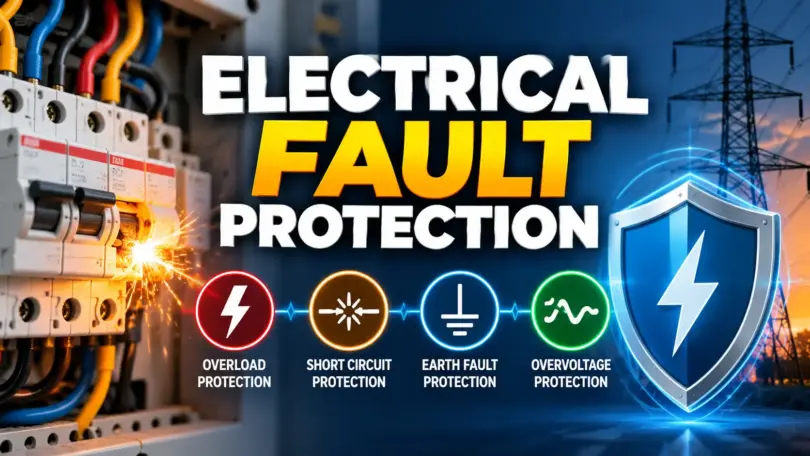
Electrical fault protection is the set of devices and wiring practices, such as circuit breakers, fuses, ground-fault circuit interrupters (GFCIs), arc-fault circuit interrupters (AFCIs), surge protectors, grounding and bonding, that detect dangerous electrical conditions and quickly stop the flow of electricity. Each device guards against a different hazard: breakers and fuses against overloads and short circuits, GFCIs against shock, and AFCIs against arcing that can start fires.
This guide covers residential electrical protection. Utility and industrial systems use different equipment, such as protective relays and differential protection, which is outside the scope of this article. Electrical codes vary by location and change over time, so confirm what applies to your home with a licensed electrician.
What Is an Electrical Fault?
An electrical fault happens when electricity flows along an unintended path or under unsafe conditions. Four types matter most in homes:
- Overload: a circuit carries more current than its wiring is designed to handle, for example too many heaters on one circuit. The wire heats up gradually.
- Short circuit: current takes an unintended low-resistance path between conductors, causing a sudden, very large surge of current.
- Ground fault: current leaks out of its intended path and flows toward ground, potentially through a person or through water.
- Arc fault: electricity jumps across a gap or flows through a damaged or loose connection, producing intense local heat that can ignite nearby materials.
These faults behave differently, so no single device handles all of them. That is why modern homes use several layers of protection.
Why this matters
The Electrical Safety Foundation International (ESFI) estimates that home electrical fires cause roughly 51,000 fires, nearly 500 deaths and about $1.3 billion in property damage each year in the United States, and it notes that arcing faults start tens of thousands of home fires annually. Figures differ between sources and years, but the pattern is consistent: worn wiring, overloaded circuits and arcing are leading electrical fire risks. See ESFI’s home electrical fire facts.
Common Electrical Fault Protection Devices
Circuit Breakers
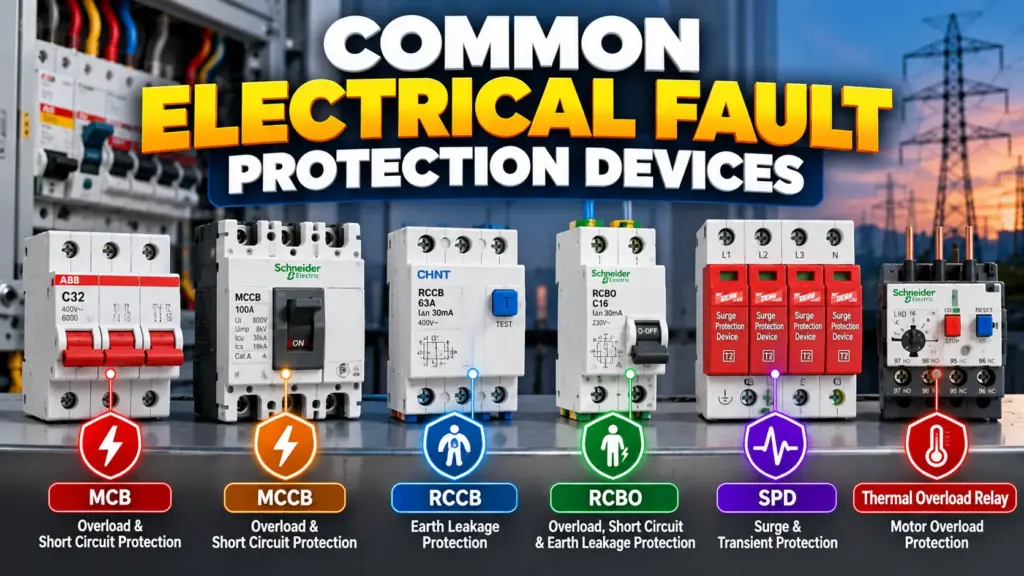
A circuit breaker protects wiring from excessive current. Most household breakers combine two mechanisms: a thermal element that reacts to sustained overloads, and a magnetic element that reacts almost instantly to short circuits. When either operates, the breaker opens the circuit and cuts power.
The breaker’s rating must match the wire it protects. A 15-amp circuit is generally wired with 14-gauge copper and a 20-amp circuit with 12-gauge copper, so swapping in a higher-rated breaker can leave the wire unprotected and allow it to overheat. Some breakers also include GFCI, AFCI or both functions.
Fuses
A fuse contains a metal element that melts when current exceeds a safe level, opening the circuit. A blown fuse cannot be reset and must be replaced with the correct type and rating. Never bypass a fuse, wrap it in foil, or install one with a higher rating than specified. Fuse boxes are common in older homes, and an electrician can advise on upgrading them.
GFCI Protection
A ground-fault circuit interrupter continuously compares the current leaving on the hot wire with the current returning on the neutral. If the two differ by a small amount, roughly a few milliamps, it assumes current is leaking through an unintended path, such as a person, and shuts off power in a fraction of a second. ESFI notes GFCIs can interrupt power in as little as 1/40 of a second.
GFCIs come in several forms:
- GFCI receptacles (outlets): protect that outlet and, if wired that way, outlets downstream of it.
- GFCI breakers: installed in the electrical panel and protect the whole circuit.
- Portable GFCIs: plug-in or cord-connected units for tools and outdoor equipment.
Newer product standards are also introducing a high-frequency GFCI type (GFCI-HF), designed to cope better with modern electronics. Ask an electrician which type suits a new installation.
AFCI Protection
An arc-fault circuit interrupter detects the electrical signature of dangerous arcing, which can occur in damaged, pinched, overheated or loose wiring and cords, and trips before the arc ignites surrounding material. AFCIs are most often installed as breakers in the panel, but outlet-type AFCIs exist for some situations. AFCIs are aimed at fire prevention, not shock protection.
Dual-function breakers combine AFCI and GFCI protection in one device, which is often the simplest option where a circuit needs both.
Surge Protection
A surge protective device (SPD) limits sudden voltage spikes caused by lightning or utility switching, protecting electronics and appliances. SPDs do not prevent shock or fires from faults in the way GFCIs and AFCIs do. The National Electrical Code requires a surge protective device at the service for dwelling units, and plug-in surge strips can add a second layer for sensitive equipment. Surge protectors wear out over time and can need replacing after major surges.
Grounding and Bonding
Grounding and bonding give fault current a safe, low-resistance path so that breakers and fuses can trip quickly, and they keep metal parts from becoming energized. They are part of a properly designed electrical system, but they do not replace breakers, fuses, GFCIs or AFCIs.
Which Device Protects Against What?
| Device | Main hazard | What it detects | Typical location |
|---|---|---|---|
| Standard breaker / fuse | Wire overheating, fire | Overload and short circuit | Panel or fuse box |
| GFCI | Electric shock | Current leaking to ground | Outlets or breakers in wet or damp areas |
| AFCI | Electrical fire | Dangerous arcing in wiring and cords | Breakers (sometimes outlets) for living areas |
| Dual-function AFCI/GFCI | Fire and shock | Arcing and ground faults | Panel |
| Surge protective device | Damage to electronics | Voltage spikes | Service panel and plug-in strips |
A common misunderstanding is that a standard breaker prevents shock. It does not. A person can receive a dangerous shock at current levels far below what trips an ordinary breaker, which is exactly why GFCIs exist.
How Fault Protection Works
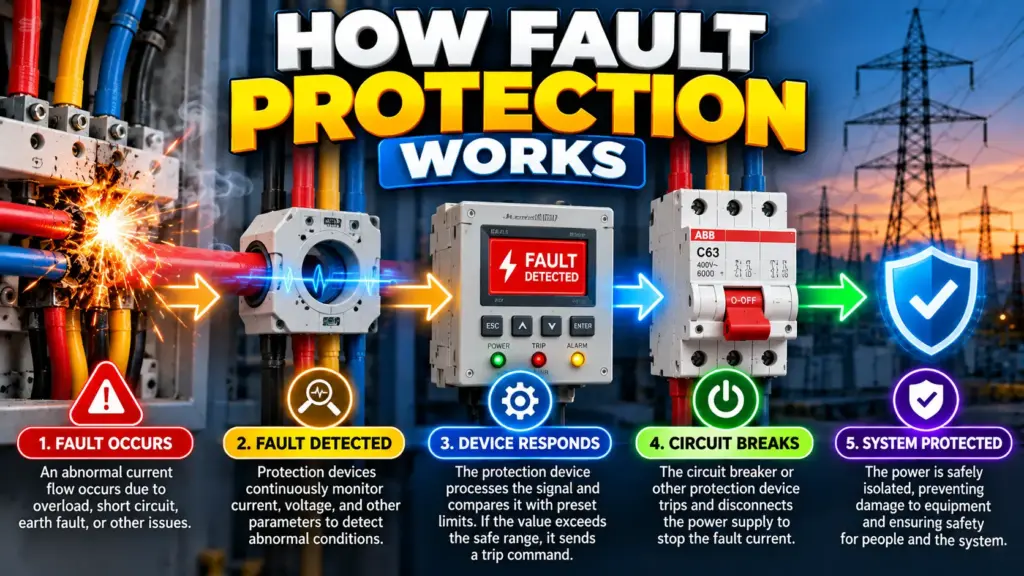
Protective devices monitor an electrical quantity, such as current magnitude, the balance between conductors, or the waveform pattern, and open the circuit when it exceeds design limits. A breaker watches total current. A GFCI watches the difference between outgoing and returning current. An AFCI analyzes the waveform for arcing patterns while ignoring harmless arcs from normal switch operation or motors.
Protection depends on correct selection, installation and maintenance. Devices can degrade, nuisance trips can hide real problems, and misuse, such as repeatedly resetting a tripping breaker, can turn a warning into a hazard.
How to Test GFCI and AFCI Protection
Fire-safety and electrical-safety organizations recommend testing GFCIs and AFCIs about once a month. An ESFI survey found that a significant share of people who tested their GFCI outlets discovered at least one that was not working, so the habit is worthwhile.
Testing a GFCI Outlet
- Plug a lamp or radio into the outlet and turn it on.
- Press the Test button. The power should shut off.
- Press the Reset button. The power should return.
- If the device does not shut off when tested, or will not reset, it has failed. Stop using it and call an electrician.
Testing an AFCI or GFCI Breaker
- Locate the breaker with a test button at the panel.
- Press the test button. The breaker should trip.
- Reset the breaker by moving the handle fully to the off position, then back to on.
- If it does not trip or will not reset, have an electrician inspect it. Devices and instructions vary, so follow the manufacturer’s directions.
Test devices at a time when losing power briefly will not cause problems, such as when computers and medical equipment are not in use on that circuit. For a quick routine, see the ESFI monthly testing guide.
Suggested Test Schedule
| Device | How often | How |
|---|---|---|
| GFCI outlets and breakers | Monthly | Press Test, confirm power off, press Reset |
| AFCI breakers | Monthly | Press Test on the breaker, then reset |
| Surge protectors | Check indicator regularly | Replace if the protection light is off or after a major surge |
| Whole panel and wiring | Periodically, and for older homes | Inspection by a licensed electrician |
What to Do When a Breaker or GFCI Keeps Tripping
A device that trips once may have responded to a temporary overload. A device that trips again and again is signaling a real problem. Do not keep resetting it.
| Situation | Likely cause | What to do |
|---|---|---|
| Standard breaker trips when several appliances run | Overloaded circuit | Unplug some devices and spread the load; if it trips with little load, call an electrician |
| Breaker trips immediately when reset | Short circuit or damaged wiring or appliance | Leave it off, unplug everything on that circuit, and call an electrician |
| GFCI trips in damp areas or outdoors | Moisture, damaged cord or appliance, or an aging device | Unplug devices one by one to find the cause; replace damaged cords; call an electrician if it persists |
| AFCI trips randomly | Arcing from a damaged cord, loose connection or sometimes a device that confuses the AFCI | Unplug devices to isolate the cause; if it keeps happening, have wiring checked |
| Device will not reset at all | Persistent fault or failed device | Stop using the circuit and call an electrician |
If a breaker is hot to the touch, you smell burning, or you see scorch marks, switch off the affected circuit if it is safe to do so and call an electrician right away.
Where the Code Requires GFCI and AFCI Protection
In the United States, the National Electrical Code (NEC) sets minimum protection requirements, and each state or city adopts a particular edition on its own schedule. The NEC is revised every three years, and the 2026 edition is the newest. Local amendments are common, so requirements in your area may differ from the general model code.
GFCI Protection
The NEC has required GFCI protection in homes since 1971 and has expanded it steadily. For dwelling units, recent editions require GFCI protection for receptacles in locations such as:
- Bathrooms and kitchens
- Garages and outdoor locations
- Basements and crawl spaces
- Laundry areas
- Areas near sinks, bathtubs and showers
Some equipment, such as certain appliances and outdoor outlets, also has specific GFCI rules.
AFCI Protection
Recent NEC editions require AFCI protection for most 120-volt, 15- and 20-amp branch circuits supplying living areas in dwelling units, including bedrooms, living and family rooms, kitchens, laundry areas, closets and hallways. Requirements are also triggered when existing circuits in those areas are modified, replaced or extended. Some locations and circuits may need both AFCI and GFCI protection.
These are general descriptions, not legal or installation advice. Exact requirements depend on the adopted code edition, local amendments and the age of the home. Older homes are often not required to match current code until they are renovated, but upgrading protection can still be worthwhile for safety.
Terminology Outside the United States
Many countries use different names for similar protection. A residual current device (RCD or RCCB) does the job of a GFCI, tripping when current leaks to earth, and household RCDs are commonly rated around 30 milliamps for personal protection. Miniature circuit breakers (MCBs) play the role of standard breakers. Arc-fault detection devices (AFDDs) are the European counterpart to AFCIs. Wiring practices and requirements differ by country, so rely on local regulations and a qualified electrician.
Warning Signs of an Electrical Problem
Contact a qualified electrician if you notice:
- Breakers that trip repeatedly or fuses that blow often
- A burning smell, scorch marks or buzzing near outlets or the panel
- Outlets or switches that feel unusually warm
- Flickering or dimming lights and frequent unexplained power interruptions
- A GFCI or AFCI that will not reset or fails its test
- Damaged cords, exposed wiring, or outlets that spark in normal use
If you see smoke or fire, stay away from the electrical equipment, leave the area and call 911. Do not touch a person or object that may still be energized.
When to Call a Licensed Electrician
Electrical panels, fixed wiring and protective devices should be handled by a qualified professional. Even with a breaker switched off, parts of the panel can remain energized, and mistakes can cause shock or fire. Call a licensed electrician if:
- A breaker or GFCI trips repeatedly or will not reset
- An outlet shows heat, discoloration or damage
- You are adding circuits, renovating or upgrading a panel
- You live in an older home with an original panel, fuse box or two-prong outlets
- You are unsure whether your home has the protection required for its locations and equipment
Homes more than a few decades old can benefit from an inspection, because wiring and devices wear out and household electrical demand has grown.
Frequently Asked Questions About Electrical Fault Protection
Is a circuit breaker the same as a GFCI?
No. A standard breaker protects wiring from overloads and short circuits. A GFCI detects small current leaks to ground that can cause shock. Some breakers combine several types of protection.
What is the difference between AFCI and GFCI?
A GFCI mainly protects people from shock by detecting current leakage. An AFCI mainly protects against fire by detecting dangerous arcing in wiring and cords. Many homes need both, and dual-function breakers provide both.
Does a GFCI prevent every electric shock?
No. It can reduce the risk of certain shocks by quickly cutting power when it detects a ground fault, but it cannot prevent every kind of shock or make unsafe electrical work safe.
Why does my breaker keep tripping?
Common causes are an overloaded circuit, a faulty appliance or a wiring problem. If it trips repeatedly, unplug devices on that circuit if it is safe to do so, and contact an electrician rather than resetting it again and again.
Why does my GFCI keep tripping?
Moisture, a damaged cord or appliance, or an aging device are frequent causes. Unplug devices one at a time to find the culprit. If it still trips or will not reset, have an electrician check it.
How often should I test GFCI and AFCI devices?
About once a month. Press the test button, confirm power turns off or the breaker trips, then reset. If a device fails the test, stop using the circuit and call an electrician.
Do I need surge protection if I have breakers?
Yes, for electronics. Breakers do not stop voltage spikes. A surge protective device at the panel, and surge strips for sensitive equipment, protect appliances from sudden surges, although they do not replace GFCI or AFCI protection.
Can I install or replace a breaker myself?
Panel work can expose you to dangerous voltage even when a breaker is off. Have a licensed electrician handle it and confirm that any replacement device is compatible with your panel and installation.
Conclusion
Electrical fault protection works as a team: breakers and fuses guard wiring against overloads and short circuits, GFCIs reduce shock risk, AFCIs reduce fire risk, surge protection safeguards electronics, and grounding gives fault current a safe path. Test your GFCI and AFCI devices monthly, treat repeated trips as a warning rather than a nuisance, and never bypass or upsize a protective device. When something does not look or behave right, have a licensed electrician inspect it.
This article is for general information and is not a substitute for professional electrical advice. Statistics and code requirements change over time. Verify current requirements with your local authority and a licensed electrician.
You May Also Like It:
Soft Starter vs VFD: Key Differences, Working Principles, and Applications
Industrial Transformers: Types, Working & Maintenance Guide
Industrial Switchgear: Types, Design, and How to Choose the Right Syste
Industrial Electrical System: A Complete Guide to Components, Installation, and Maintenance