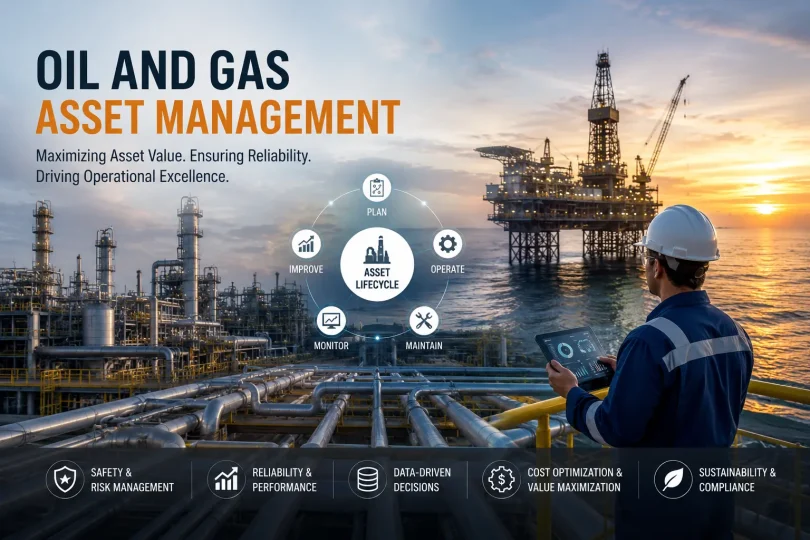

Oil and gas asset management is the strategic process of tracking, maintaining, and optimizing physical, digital, and human assets across exploration, production, refining, and distribution. Oil and gas asset management software centralizes this data to reduce downtime, cut maintenance costs, and improve regulatory compliance.
Oil and gas companies operate some of the most complex, geographically dispersed, and high-risk assets in any industry. Drilling rigs, pipelines, wellheads, pumps, and refining equipment must run reliably in harsh environments while meeting strict safety and environmental regulations. When even one critical asset fails unexpectedly, the result can be lost production, environmental risk, and costly downtime. This is why asset management oil and gas companies rely on has become a core operational discipline rather than a back-office function.
This guide explains what oil and gas asset management involves, how oil and gas asset management software works, and what to look for when selecting a solution for your operations.
What Is Oil and Gas Asset Management?
Oil and gas asset management is the systematic process of maximizing the value of physical assets throughout their entire lifecycle, from exploration and production through refining and distribution. It covers everything from scheduling preventive maintenance on a pump to tracking the depreciation and compliance status of an entire pipeline network.
Asset management software oil and gas operators use typically organizes assets into three broad categories:
- Physical assets – drilling rigs, wellheads, pipelines, compressors, storage tanks, and refining equipment that require ongoing maintenance, inspection, and safety monitoring.
- Digital assets – software systems, sensor data, and analytics platforms that provide visibility into how physical assets are performing.
- Human assets – the engineers, technicians, and field crews whose scheduling, training records, and safety compliance also fall under a broader asset management strategy.
The goal across all three categories is the same: keep assets running safely, extend their useful life, and make sure every maintenance dollar spent actually reduces risk or improves performance.
Why Oil and Gas Industry Asset Management Matters
Unplanned downtime in the oil and gas industry doesn’t just cost production time. It can also trigger safety incidents, regulatory penalties, and reputational damage. A well-structured oil and gas industry asset management program addresses several pressures at once:
- Aging infrastructure. Many pipelines, rigs, and processing facilities have been in operation for decades, which increases the risk of unexpected failure without proactive monitoring.
- Regulatory complexity. Beyond general workplace safety rules, operators must comply with regulations covering emissions, hazardous material handling, and emergency response planning.
- Fragmented data. Without a centralized system, operations, finance, and engineering teams often work from different spreadsheets and databases, leading to duplicated effort and blind spots.
- Cost pressure. Operators are under constant pressure to extend asset life and maximize output from existing infrastructure rather than relying solely on new capital projects.
Field service asset management practices have been reported to lower operational costs by roughly 20 to 30 percent for oil and gas operators, largely by shifting maintenance from reactive to proactive strategies and reducing unplanned downtime.
Oil and Gas Asset Management Software: Core Features Compared
Not all software in this category does the same job. The table below compares the main types of systems operators typically evaluate.
| Software Type | Primary Function | Best For |
|---|---|---|
| EAM (Enterprise Asset Management) | Manages asset hierarchy, work orders, and maintenance history | Large operators with thousands of tracked components |
| CMMS (Computerized Maintenance Management System) | Schedules preventive maintenance and tracks repairs | Mid-size operators focused on maintenance workflows |
| APM (Asset Performance Management) | Uses sensor data and analytics to predict failures | Operators prioritizing predictive maintenance |
| Asset Integrity Management Software | Tracks inspections, risk-based inspection programs, and compliance documentation | High-hazard assets like pipelines and pressure vessels |
| Asset Tracking / RTLS Systems | Monitors real-time location and status of equipment and personnel | Operators with assets spread across remote or hazardous sites |
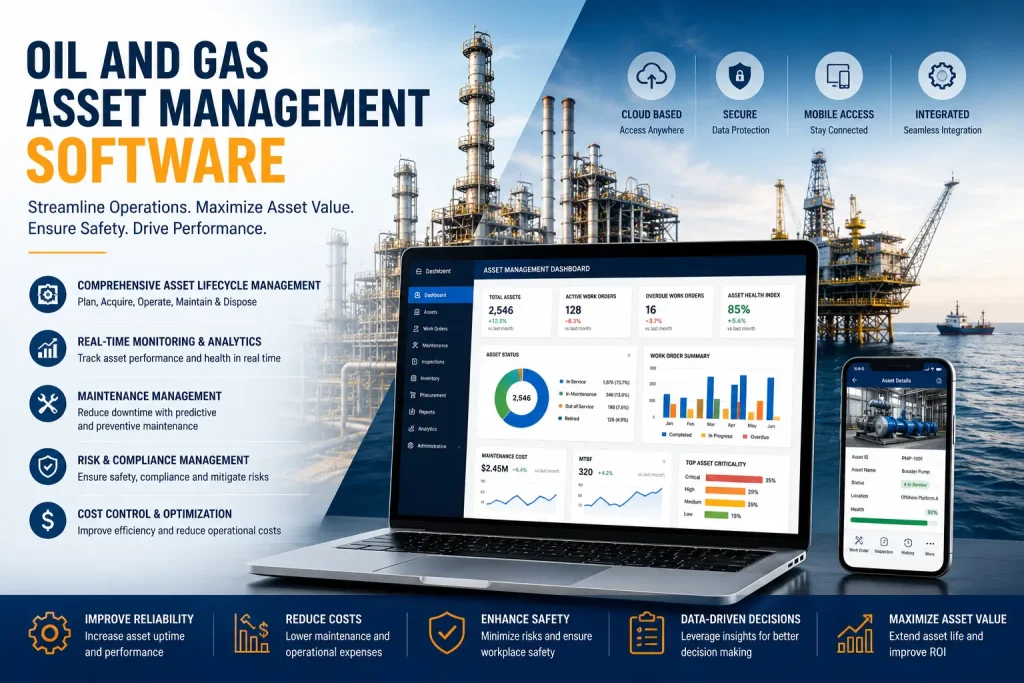
Most modern oil and gas asset management software combines several of these functions into a single platform, integrating maintenance scheduling, inventory control, compliance reporting, and analytics so that operations, finance, and engineering teams work from one shared source of data.
Key Features to Look For in Asset Management Software Oil and Gas Companies Use
- Real-time monitoring – integration with IoT sensors and SCADA systems to track equipment health as conditions change.
- Predictive maintenance – analytics that flag developing issues, such as abnormal vibration or temperature, before they cause a shutdown.
- Risk-based inspection (RBI) – prioritizing inspection resources toward high-consequence equipment rather than treating every asset equally.
- Mobile access – apps that let field technicians view work orders, update asset status, and submit reports from remote sites.
- Inventory and spare parts management – real-time visibility into stock levels to prevent both overstocking and costly part shortages.
- Regulatory compliance tracking – automated documentation and audit trails to reduce the administrative burden of environmental and safety reporting.
- System integration – the ability to connect with existing ERP, HR, procurement, and finance systems rather than operating as an isolated tool.
Asset Lifecycle Stages in Oil and Gas
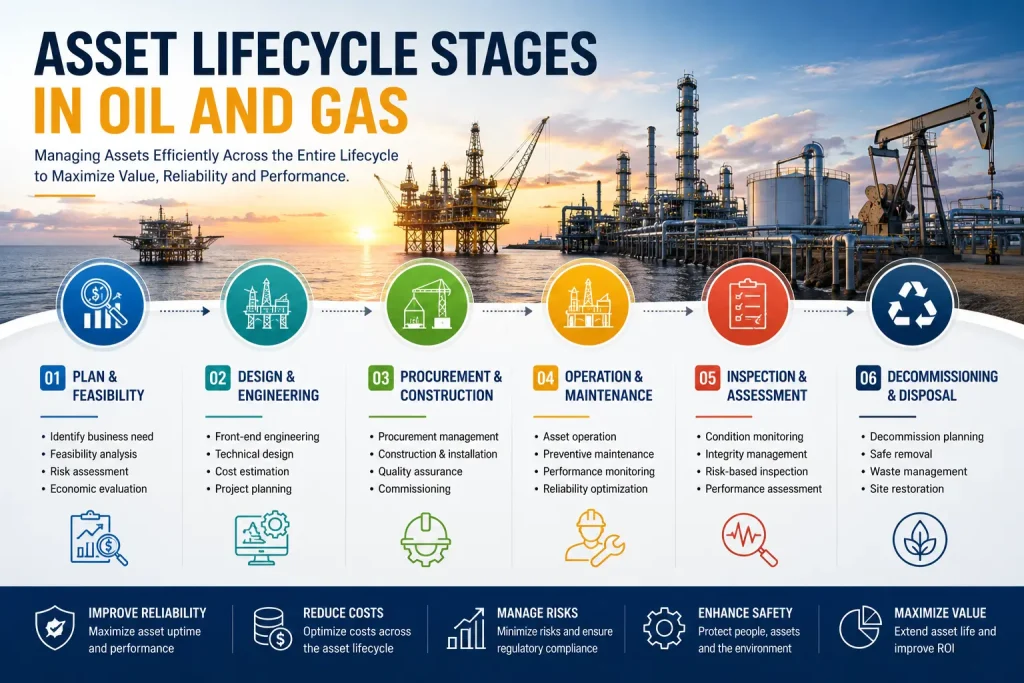
Effective asset management oil and gas operators rely on spans the full lifecycle of each asset:
- Planning and acquisition – selecting and procuring equipment based on operational needs and expected lifespan.
- Installation and commissioning – ensuring new assets meet safety and performance specifications before going into service.
- Operation and monitoring – tracking day-to-day performance, condition, and usage data.
- Maintenance and repair – performing preventive, predictive, or corrective maintenance based on real-time and historical data.
- Inspection and compliance – conducting scheduled inspections and maintaining documentation for regulatory audits.
- Decommissioning – safely retiring assets at the end of their useful life while managing environmental and regulatory obligations.
Benefits of a Strong Oil and Gas Asset Management Strategy
- Reduced downtime by shifting from reactive repairs to predictive and preventive maintenance.
- Lower maintenance costs through better scheduling and more accurate spare parts forecasting.
- Improved safety by identifying equipment issues before they escalate into incidents.
- Stronger regulatory compliance through automated documentation and audit-ready reporting.
- Better capital planning by giving finance and engineering teams shared visibility into asset performance and replacement timing.
- Extended asset life through consistent, data-driven maintenance rather than guesswork.
Common Challenges in Oil and Gas Asset Management
- Geographic dispersion. Assets like pipelines and offshore platforms can span vast, remote areas, making inspection and maintenance logistically difficult.
- Harsh operating environments. Extreme temperatures, corrosive materials, and hazardous conditions accelerate wear and complicate data collection.
- Legacy systems. Many operators still rely on spreadsheets or outdated software that doesn’t integrate well with modern analytics tools.
- Skilled labor shortages. Experienced technicians are often stretched across multiple sites, making efficient scheduling essential.
- Data silos. When operations, maintenance, and finance teams use separate systems, it becomes difficult to get a single accurate view of asset health and cost.
How to Choose the Right Oil and Gas Asset Management Software
- Match the software to your asset complexity. A small operator may only need a CMMS, while a large operator with thousands of components may require a full EAM platform.
- Prioritize integration capability. The software should connect with your existing ERP, procurement, and finance systems rather than creating another data silo.
- Check for industry-specific features. Generic asset management tools often lack oil and gas-specific capabilities like risk-based inspection or pipeline integrity tracking.
- Evaluate mobile and offline functionality. Field technicians working in remote areas need reliable mobile access, including offline data capture.
- Confirm compliance and reporting tools. The platform should generate audit-ready documentation for the specific regulations your operations fall under.
- Consider scalability. Choose a platform that can grow with your asset base rather than one that will need replacing as operations expand.
Frequently Asked Questions
What is oil and gas asset management?
It’s the strategic process of tracking, maintaining, and optimizing physical, digital, and human assets across the full lifecycle of oil and gas operations, from exploration through decommissioning.
What is the difference between EAM and CMMS in oil and gas?
EAM (Enterprise Asset Management) typically covers a broader scope, including financial and lifecycle asset data, while CMMS (Computerized Maintenance Management System) focuses more specifically on maintenance scheduling and work orders. Many oil and gas platforms combine both.
Why is asset management important in the oil and gas industry?
It reduces unplanned downtime, lowers maintenance costs, improves safety, and helps operators meet strict regulatory requirements across upstream, midstream, and downstream operations.
What features should oil and gas asset management software include?
Look for real-time monitoring, predictive maintenance, risk-based inspection, mobile field access, inventory management, and compliance reporting, along with the ability to integrate with existing ERP and finance systems.
How does predictive maintenance work in oil and gas asset management?
Predictive maintenance uses sensor data on vibration, temperature, and pressure to detect early signs of equipment failure, allowing teams to schedule repairs before a breakdown causes unplanned downtime.
Can asset management software reduce operational costs?
Yes. Field service asset management practices have been associated with operational cost reductions of roughly 20 to 30 percent, largely through reduced downtime and more efficient maintenance scheduling.
Is oil and gas asset management software different from general asset management tools?
Yes. Generic asset management software often lacks industry-specific capabilities such as pipeline integrity tracking, risk-based inspection programs, and compliance features built around oil and gas regulations.
What industries within oil and gas use asset management software?
It’s used across upstream (exploration and production), midstream (pipelines and storage), and downstream (refining and distribution) operations, each with slightly different asset types and compliance requirements.
Final Thoughts
Oil and gas asset management is no longer just about keeping equipment running. It’s about connecting physical assets, digital data, and human resources into a single, reliable system that reduces risk, controls costs, and keeps operations compliant. Whether you’re evaluating oil and gas asset management software for the first time or upgrading from a legacy system, the right platform should give every stakeholder, from field technicians to finance teams, the same accurate, real-time view of asset performance.
Looking to upgrade your asset management strategy? Choose a platform built specifically for the oil and gas industry, one that combines predictive maintenance, compliance tracking, and system integration, so your team can move from reactive fixes to proactive, data-driven operations.
You May Also Like It:
CNC Machining Tolerances: The Complete Expert Guide
Prototype CNC Machining: The Complete Expert Guide
Steel Grade: The Complete Guide to Understanding Every Type of Steel