
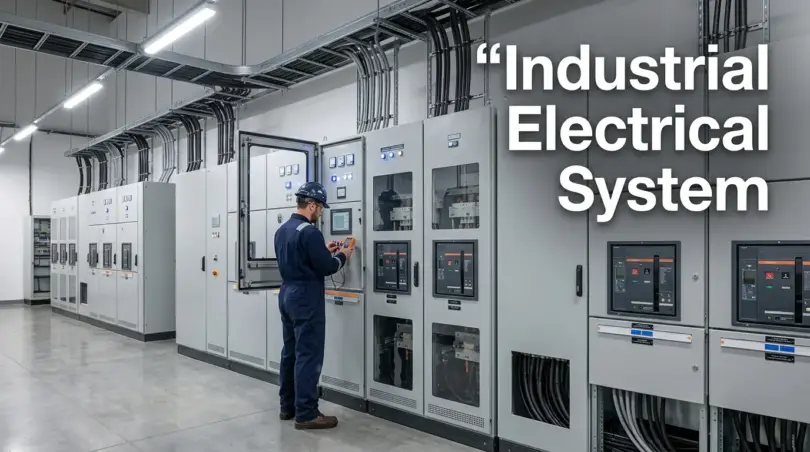

An industrial electrical system is the network of transformers, switchgear, panels, cables, motors, and controls that brings power into a factory, distributes it safely, and delivers it to machines. Sound design, correct installation, strong safety practices, and regular maintenance keep it reliable. This guide explains each part in plain language.
What Is an Industrial Electrical System?
An industrial electrical system is the complete set of equipment, wiring, and controls that receives electrical power, distributes it safely across a facility, and delivers it to machines, motors, lighting, and automation equipment. It includes everything from the point where utility power enters the site to the final connection at each machine.
How It Differs from Residential and Commercial Systems
At a basic level, all electrical systems do the same job. The difference is scale and demand.
- Higher power requirements: Industrial equipment such as large motors, furnaces, compressors, and welding machines draws far more power than office or home appliances.
- Higher voltages: Industrial sites often receive power at medium voltage and step it down internally.
- Three-phase power: Most heavy machinery runs on three-phase supply, while homes mostly use single-phase.
- Harsher environments: Dust, moisture, heat, vibration, and chemicals put extra stress on equipment.
- Complex controls: Industrial systems often integrate with PLCs, drives, sensors, and automated production lines.
How an Industrial Electrical System Works
Electricity follows a logical path through a facility:
- Supply: Power arrives from the utility grid, or from an on-site generator or renewable source.
- Transformers: These adjust the voltage to levels the facility can use.
- Main switchgear: This receives the incoming power, protects the system, and allows isolation.
- Distribution panels: Power is split into multiple circuits for different areas or processes.
- Control systems: Motor control centers, starters, and drives manage how equipment runs.
- Machines and equipment: Finally, power reaches motors, heaters, lighting, and other loads.
Think of it like a water supply network. The main pipe brings in a large volume, and it is gradually divided into smaller lines until each tap gets the right amount.
Main Components of an Industrial Electrical System
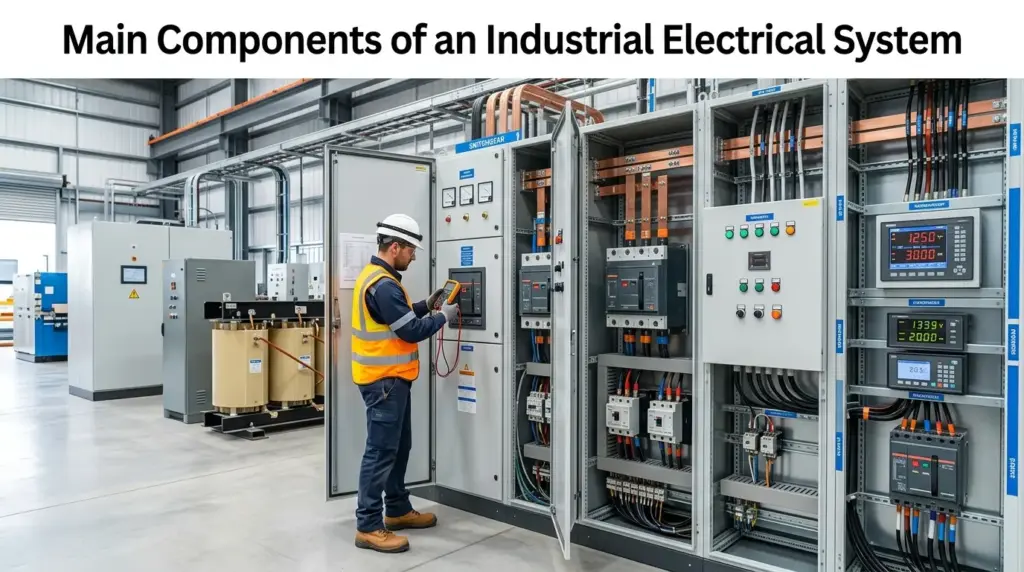
Understanding the individual parts makes the whole system easier to plan, maintain, and troubleshoot.
Transformers
Transformers raise or lower voltage. In most plants, they step down high incoming voltage to a level suitable for machines and lighting. Dry-type and oil-filled transformers are both common, and the choice depends on capacity, location, and safety requirements.
Industrial Switchgear and Circuit Breakers
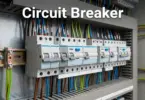
Switchgear is a group of switches, breakers, fuses, and protective relays housed together. Its job is protection and isolation. If a short circuit or overload occurs, the breaker trips and cuts power to the affected section so that cables, equipment, and people are protected. Switchgear also lets maintenance teams isolate parts of the system safely.
Distribution Panels
Distribution panels take the main supply and divide it into separate circuits. Each circuit has its own protective device, so a fault in one area does not shut down the entire plant. Well-organized, clearly labeled panels save a lot of time during troubleshooting.
Industrial Control Panels
Industrial control panels house the devices that control machines and processes. These include PLCs, relays, contactors, timers, push buttons, and indicator lights. They tell motors when to start, when to stop, and how to respond to changing conditions.
Motors and Motor Control Systems
Motors are among the largest electrical loads in any plant. To run them properly, you need motor control systems, which include:
- Motor starters: Start and stop motors and protect them from overload.
- Variable frequency drives (VFDs): Control motor speed by adjusting the frequency and voltage supplied. This saves energy and reduces mechanical stress.
- Soft starters: Limit the sudden surge of current when a motor starts.
Cables, Busbars, and Electrical Conduits
Cables carry power and signals. Busbars are solid metal conductors used inside switchgear and panels to carry high current. Conduits and cable trays protect and organize the wiring. Cable sizing matters a great deal. An undersized cable overheats and wastes energy, while an oversized one adds unnecessary cost.
Grounding and Bonding Systems
Grounding gives fault current a safe path to earth, allowing protective devices to operate quickly. Bonding connects metal parts together so they stay at the same electrical potential. Together, they protect both equipment and workers from shock and fire.
Understanding Industrial Electrical Power
Industrial electrical power refers to the electricity supplied to and used within a facility to run heavy equipment and processes. A few basic concepts help make sense of it.
- Voltage: The electrical “pressure” pushing current through a circuit.
- Current: The flow of electric charge, measured in amperes.
- Power: The rate at which energy is used, measured in watts or kilowatts.
- Frequency: How many times per second the alternating current changes direction, usually 50 Hz or 60 Hz depending on the country.
Single-Phase vs Three-Phase Power
Single-phase power is common in homes and small offices. Three-phase power uses three alternating currents offset from each other, which delivers power more smoothly and efficiently. That is why industrial motors and heavy machinery almost always run on three-phase supply. It allows smaller conductors for the same power and gives motors better starting and running performance.
Power Factor and Energy Efficiency
Power factor tells you how effectively electrical power is being converted into useful work. Motors and transformers create reactive power, which lowers the power factor. A low power factor means you draw more current than necessary, which increases losses and can lead to penalties from utilities in some regions. Power factor correction, usually with capacitor banks, helps bring it closer to an ideal value and reduces wasted energy.
Industrial Power Distribution: From Utility to Machine
Industrial power distribution follows a clear chain:
- Incoming utility power enters the site, often at medium voltage.
- Main switchboard receives and controls the supply.
- Transformers step the voltage down.
- Distribution boards split power into smaller circuits.
- Final equipment connections deliver power to motors, machines, and lighting.
A good electrical distribution system is designed with room for growth, so adding a new production line later does not force a complete redesign.
What Does Industrial Electrical Work Include?
Industrial electrical work covers a wide range of tasks that keep a facility powered and running. The scope typically includes:
- New electrical installations
- Equipment and industrial electrical wiring
- Motor connections
- Control panel installation
- Cable routing and support
- Testing and commissioning
- Troubleshooting and repairs
- Preventive maintenance
It is not just about connecting wires. It involves planning, coordination with other trades, strict safety practices, and documentation.
Industrial Electrician vs Commercial Electrician
Both are skilled professionals, but their working conditions are different.
| Area | Industrial Electrician | Commercial Electrician |
|---|---|---|
| Work environment | Factories, plants, processing facilities | Offices, shops, malls, hotels |
| Equipment | Motors, drives, PLCs, switchgear, control panels | Lighting, outlets, HVAC, fire alarms |
| Voltage and power | Medium and high voltage, high-power loads | Mostly low voltage |
| Safety concerns | Arc flash, heavy machinery, hazardous areas | General building hazards |
| Troubleshooting | Complex, often involves controls and automation | Usually simpler circuits |
Industrial electricians also need a good understanding of process control and how machines behave, not just how circuits are wired.
Industrial Electrical Installation: Step-by-Step Process
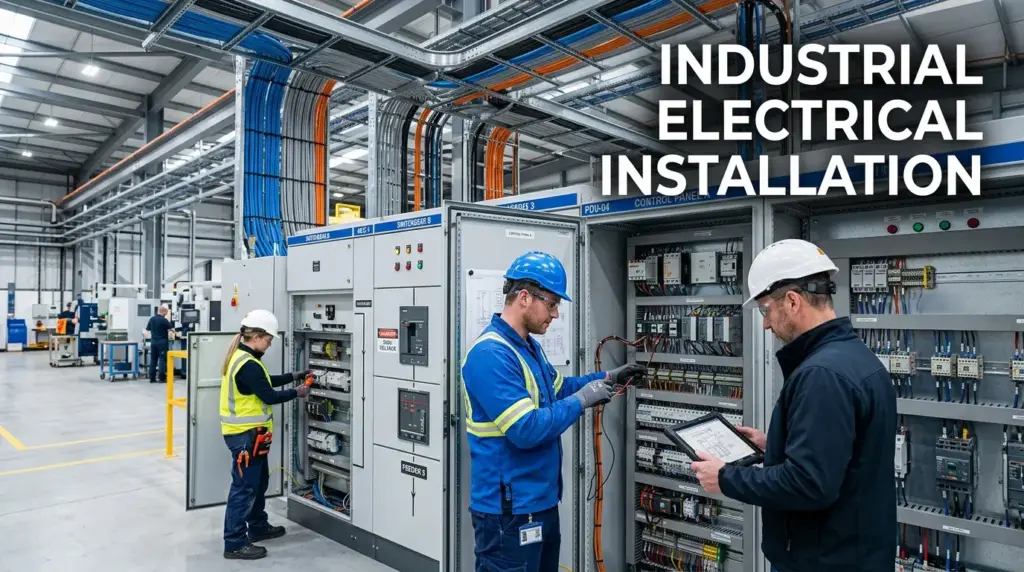
Industrial electrical installation is a structured process. Skipping steps or rushing the early stages often leads to expensive problems later. Here is how a typical project unfolds.
1. Electrical Load Assessment
Everything starts with knowing how much power you need. This includes:
- The connected load of all machinery
- Peak demand, which is when the most equipment runs at once
- Future expansion, so the system does not become obsolete in a few years
2. Industrial Electrical System Design
Industrial electrical design turns the load assessment into a workable plan. It usually includes:
- Electrical load calculation
- Single-line diagrams that show how power flows through the facility
- Equipment selection for transformers, breakers, panels, and drives
- Cable sizing, based on current, length, voltage drop, and installation conditions
3. Power Distribution Installation
Next, the main equipment is installed: transformers, switchgear, distribution panels, and busbars. Correct placement, ventilation, clearances, and access are all important.
4. Cable and Conduit Installation
Cables are routed through trays, conduits, or trenches. Good practice includes:
- Keeping power and control cables separated where needed
- Following planned routes to avoid damage
- Labeling every cable clearly so future maintenance is easier
5. Equipment and Motor Connections
Machines, motors, and control systems are then wired to the distribution network. Phase sequence, terminations, and protective device settings must all be correct.
6. Grounding and Protection
Grounding electrodes, equipment grounding conductors, and overcurrent protection are installed and checked. This step is critical for safety.
7. Testing and Commissioning
Before power is fully applied, the system is tested. Electrical testing and commissioning typically include:
- Insulation resistance testing
- Continuity testing
- Grounding tests
- Protection-system testing, including relay and breaker checks
- Functional testing of equipment and control logic
Only after these tests pass should the system be handed over for normal operation.
Industrial Electrical Safety: Hazards and Best Practices
Electricity in an industrial setting carries serious risks, so safety cannot be an afterthought.
Key Electrical Hazards
- Electric shock: Contact with live parts can cause injury or death.
- Arc flash: A sudden release of energy from an electrical fault, producing extreme heat, light, and pressure.
- Short circuits: Cause very high fault currents that can damage equipment and start fires.
- Overloads: Sustained excess current overheats conductors and equipment.
Lockout/Tagout (LOTO)
Lockout/Tagout is a procedure that ensures equipment is fully de-energized and cannot be switched on while someone is working on it. The energy source is isolated, locked, and tagged, and the absence of voltage is verified before work begins. Many serious accidents happen when this step is skipped.
Essential Industrial Electrical Safety Practices
- Personal protective equipment (PPE): Insulated gloves, face shields, arc-rated clothing, and safety footwear suited to the hazard level.
- Proper grounding: Ensures fault current has a safe path.
- Circuit protection: Correctly rated breakers, fuses, and relays.
- Equipment isolation: Clear procedures to disconnect and lock out equipment.
- Warning labels: Visible signs on panels, enclosures, and hazardous areas.
- Regular inspections: Catch problems before they become accidents.
- Trained personnel: Only qualified and competent people should work on live or high-energy equipment.
A strong safety culture matters as much as the equipment itself. When people feel comfortable stopping a job to ask questions, fewer accidents happen.
Common Problems in Industrial Electrical Systems and How to Troubleshoot Them
Even well-built systems develop faults over time. Knowing the common problems helps you catch them early. Always follow lockout procedures and let qualified personnel handle testing and repairs.
Voltage Drops
- Causes: Undersized or overly long cables, loose connections, overloaded circuits.
- Warning signs: Motors running hot or slowly, dimming lights, equipment resetting.
- Consequences: Reduced efficiency, motor damage, process interruptions.
- Basic troubleshooting: Measure voltage at the source and at the load, check cable sizing and connection tightness, and review load levels.
Overloaded Circuits
- Causes: Too many machines on one circuit, added equipment without upgrading capacity.
- Warning signs: Frequent breaker trips, warm cables or panels.
- Consequences: Overheating, insulation damage, fire risk.
- Basic troubleshooting: Measure actual current, compare against ratings, and redistribute or upgrade the circuit.
Power Factor Problems
- Causes: Many lightly loaded motors, inductive loads, failed capacitors.
- Warning signs: Utility penalties, high current for the work being done.
- Consequences: Higher energy costs and wasted capacity.
- Basic troubleshooting: Measure power factor and inspect or add power factor correction equipment.
Overheating Components
- Causes: Loose terminals, overload, poor ventilation, dust buildup.
- Warning signs: Discolored terminals, burning smell, hot enclosures.
- Consequences: Component failure, fire, unplanned shutdowns.
- Basic troubleshooting: Use thermal imaging, tighten connections, clean panels, and improve airflow.
Electrical Surges
- Causes: Lightning, switching of large loads, utility disturbances.
- Warning signs: Damaged electronics, unexplained equipment failures.
- Consequences: Damaged drives, PLCs, and sensitive devices.
- Basic troubleshooting: Check surge protective devices, grounding quality, and switching events.
Motor Failures
- Causes: Overload, bearing wear, poor ventilation, voltage imbalance, moisture.
- Warning signs: Unusual noise, vibration, overheating, tripping.
- Consequences: Production stoppages and costly replacements.
- Basic troubleshooting: Check supply voltage and current balance, inspect bearings, and test winding insulation.
Loose or Damaged Connections
- Causes: Vibration, thermal cycling, poor installation.
- Warning signs: Hot spots, arcing marks, intermittent faults.
- Consequences: Arcing, fires, unpredictable equipment behavior.
- Basic troubleshooting: Inspect visually, use thermal imaging, and re-torque connections to the manufacturer’s values.
Insulation Failure
- Causes: Age, moisture, heat, chemical exposure, mechanical damage.
- Warning signs: Falling insulation resistance readings, earth leakage trips.
- Consequences: Ground faults, shock hazards, equipment damage.
- Basic troubleshooting: Perform insulation resistance testing and replace damaged cables or windings.
Breaker Tripping
- Causes: Overload, short circuit, ground fault, faulty breaker, incorrect settings.
- Warning signs: Repeated tripping without an obvious cause.
- Consequences: Downtime and, if ignored, larger failures.
- Basic troubleshooting: Identify the trip type, inspect the circuit and load, and never keep resetting a breaker without finding the cause.
Industrial Electrical Maintenance: Keeping Your System Reliable
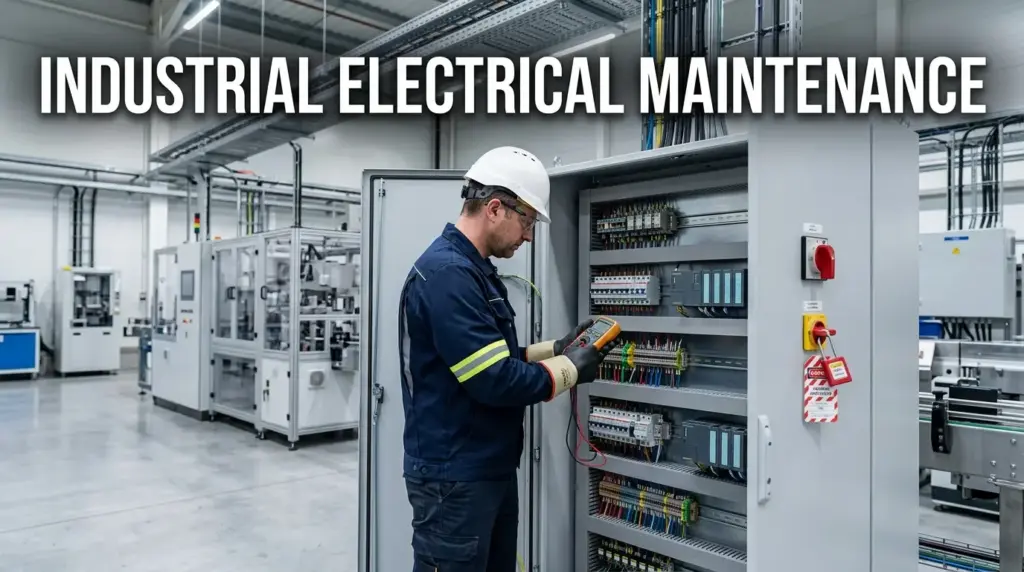
Industrial electrical maintenance is what protects your investment. There are two broad approaches.
- Preventive maintenance: Planned inspections, testing, and servicing done before failures occur.
- Corrective maintenance: Repairs done after something breaks.
Corrective maintenance is sometimes unavoidable, but relying on it alone usually means more downtime, higher costs, and greater risk. Preventive electrical maintenance is almost always cheaper in the long run.
What Good Maintenance Includes
- Regular inspections: Visual checks for damage, heat marks, and unusual noise.
- Thermal imaging: Reveals hot spots in panels, connections, and motors that are invisible to the eye.
- Cable and connection checks: Looking for wear, damage, and loose terminations.
- Breaker testing: Confirms protective devices operate as intended.
- Motor inspections: Checking temperature, vibration, alignment, and insulation condition.
- Grounding system checks: Verifying continuity and connection integrity.
- Cleaning electrical panels: Removing dust and debris that cause overheating and tracking.
- Documentation: Recording findings, test results, and repairs to spot trends over time.
How Often Should Industrial Electrical Systems Be Inspected?
There is no single answer, since it depends on the equipment, environment, and criticality. As a general approach:
- Routine visual inspections: Often weekly or monthly, done by plant staff.
- Periodic testing: Commonly annual, such as thermal imaging and protection testing, with some tasks done every few years.
- Condition-based maintenance: Systems in dusty, humid, corrosive, or high-vibration environments usually need more frequent attention.
Follow manufacturer recommendations and applicable local standards, and adjust the schedule based on what your inspections reveal.
How to Improve Industrial Electrical System Efficiency
Electricity is often one of the largest operating costs for a plant. Small improvements can add up to major savings.
- Reduce unnecessary energy use: Switch off idle equipment and review compressed air, lighting, and HVAC loads.
- Improve power factor: Use capacitor banks or other correction equipment where needed.
- Use efficient motors: High-efficiency motors cost more upfront but pay back through lower running costs.
- Install variable frequency drives: For pumps and fans, slowing the motor slightly can cut energy use significantly.
- Keep up with preventive maintenance: Loose connections and dirty equipment waste energy.
- Monitor energy use: Sub-metering shows where power is really going.
- Balance loads: Spreading load evenly across phases reduces losses and stress.
- Reduce electrical losses: Proper cable sizing, tight connections, and good power quality all help.
Start with monitoring. You cannot improve what you do not measure.
Industrial Electrics and Automation
Modern industrial electrics and automation are closely linked. Automation cannot work without a stable, well-designed electrical system, and electrical systems increasingly rely on automation for control and monitoring.
Key elements include:
- PLCs (programmable logic controllers): The “brains” that run machine logic.
- Sensors: Measure temperature, pressure, position, flow, and more.
- Motor control: Drives and starters managed automatically.
- Industrial control panels: House the devices that tie everything together.
- SCADA systems: Give operators a real-time view of the plant and allow remote control.
- Automated production lines: Coordinate many machines with minimal manual input.
Role of Electrical Systems in Industrial Automation
- Reliable power supply: Even brief interruptions can stop automated lines and corrupt processes.
- Machine control: Electrical components carry out the commands from controllers.
- Data and monitoring: Signals and networks feed information back for analysis and decision-making.
- Safety interlocks: Emergency stops, guard switches, and safety relays protect people and machines.
Standards and Codes for Industrial Electrical Systems
Electrical codes and standards exist to make installations safe, consistent, and dependable. Following them is not just a legal matter. It reduces the risk of fire, injury, and equipment failure.
Requirements differ from one country and region to another, so always confirm which rules apply in your jurisdiction. Some commonly referenced examples are:
- Local electrical regulations: National or regional laws and utility requirements that apply where the facility is located.
- NEC / NFPA 70: The National Electrical Code, used mainly in the United States and referenced in some other regions.
- IEC standards: International standards used widely across Europe, Asia, the Middle East, and elsewhere.
- Equipment-specific standards: Rules for particular equipment such as transformers, switchgear, motors, and control panels.
Compliance matters because it supports safety, helps with insurance and inspections, and makes future modifications easier. Before starting any project, check with your local authority or a qualified engineer about which standards and approvals apply to you.
How to Choose an Industrial Electrical Contractor
The right industrial electrical contractor can make the difference between a smooth project and years of headaches. When evaluating candidates, look at:
- Relevant industrial experience: Have they worked on facilities similar to yours?
- Licensing and certification: Confirm they hold the credentials required in your area.
- Safety record: Ask about their safety policies, training, and incident history.
- Design capabilities: Can they handle load studies, single-line diagrams, and equipment selection?
- Installation experience: Look for proven work with switchgear, control panels, and motor systems.
- Testing and commissioning skills: Good contractors test thoroughly and provide results.
- Maintenance support: Can they help after handover?
- Documentation: Expect as-built drawings, test reports, and clear records.
Ask for references, and if possible, visit a completed project. Do not choose on price alone. A cheap installation that fails early costs far more.
Industrial Electrical Maintenance Checklist
Use this table as a starting point and adapt it to your site.
| Inspection Area | What to Check |
|---|---|
| Electrical Panels | Connections, heat, damage, dust buildup |
| Cables | Insulation, wear, routing, labeling |
| Breakers | Operation, condition, trip settings |
| Motors | Temperature, vibration, connections, noise |
| Grounding | Continuity and connection tightness |
| Transformers | Temperature, oil level and condition where applicable |
| Control Panels | Components, wiring, indicator lights |
| Safety Equipment | Labels, barriers, emergency stops, PPE availability |
Keep dated records of every inspection so you can compare readings over time.
Frequently Asked Questions About Industrial Electrical Systems
What is an industrial electrical system?
It is the complete network of equipment and wiring that receives, distributes, controls, and protects electrical power in an industrial facility, from the utility connection to the machines on the floor.
What are the main components of an industrial electrical system?
The main parts are transformers, switchgear and circuit breakers, distribution panels, control panels, motors and motor control systems, cables and busbars, and grounding and bonding systems.
What is industrial electrical work?
It is the design, installation, testing, troubleshooting, repair, and maintenance of electrical equipment in factories, plants, and other industrial sites.
What is involved in industrial electrical installation?
Typical steps are load assessment, system design, installing power distribution equipment, cable and conduit work, connecting equipment and motors, grounding and protection, and finally testing and commissioning.
What is industrial electrical power?
It is the electricity supplied to and used inside an industrial facility, usually three-phase, at higher voltage and capacity than residential or commercial supply, to run heavy equipment and processes.
What is the difference between industrial and commercial electrical systems?
Industrial systems handle higher power and voltage, use three-phase supply widely, operate in harsher environments, and include complex motor and automation controls. Commercial systems mainly serve lighting, outlets, and building services at lower loads.
How often should an industrial electrical system be maintained?
It depends on the equipment and environment. Many sites do routine visual checks weekly or monthly and more detailed testing, such as thermal imaging and protection testing, at least once a year. Harsh conditions call for more frequent attention.
Why is grounding important in industrial electrical systems?
Grounding gives fault current a safe path to earth so protective devices trip quickly. It reduces shock risk, limits equipment damage, and helps prevent fires.
How can industrial electrical systems become more energy efficient?
Improve power factor, use high-efficiency motors and VFDs, balance loads, maintain connections and equipment, monitor energy use, and reduce electrical losses through proper cable sizing and good design.
Conclusion
A dependable industrial electrical system is the backbone of any production facility. It brings power in safely, distributes it where it is needed, protects people and equipment, and supports the automation that modern industry depends on.
The formula for success is straightforward: sound design, quality installation, thorough testing, strong safety practices, and consistent preventive maintenance. When these come together, plants see better uptime, lower energy costs, and fewer safety incidents.
Whether you are planning a new facility, upgrading an existing one, or trying to reduce breakdowns, involve qualified professionals early. Proper design, installation, testing, and ongoing maintenance are investments that pay back for many years.
You May Also Like It:
Industrial Robot Safety: The Complete 2026 Guide for Facilities, Engineers & Safety Managers
Safety Topics: Guide to OSHA Safety Topics, Toolbox Talks, and Meeting Ideas
Industrial Safety Signs: The Complete Guide to Types, Meanings, Colors, and Standards


[…] switchgear controls, isolates, and protects electrical systems through coordinated sensing, relay decision-making, and breaker […]