What Is a CNC Milling Machine?
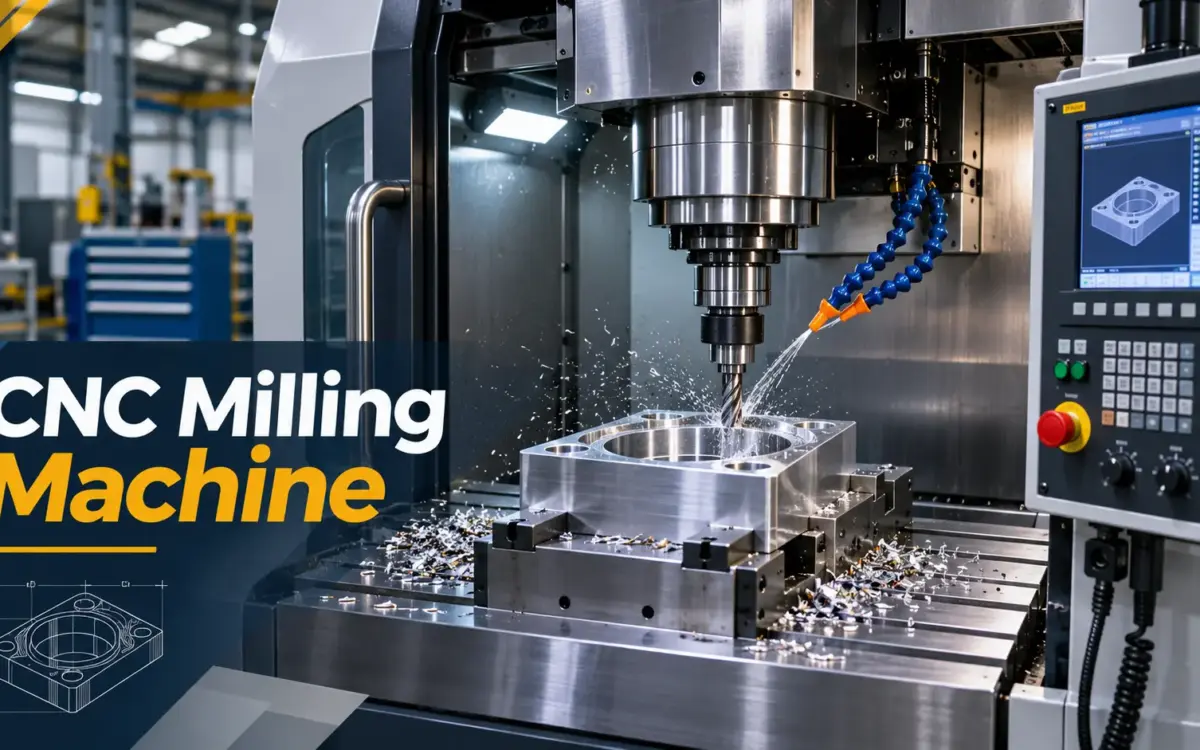
A CNC milling machine is a computer-controlled machine tool that removes material from a solid block (metal, plastic, wood or composite) using a rotating cutting tool, following programmed G-code instructions to produce precise, repeatable parts.
In simple words: you design a part on a computer, the machine reads the program, and a spinning cutter carves the part out of raw material automatically, with tolerances as tight as ±0.01 mm on good machines.
| Quick Facts | Details |
|---|---|
| Full form | CNC = Computer Numerical Control |
| Process type | Subtractive manufacturing (material is cut away) |
| Cutting action | Rotating multi-tooth cutter against a fixed or moving workpiece |
| Typical materials | Aluminium, steel, stainless steel, titanium, brass, plastics, wood, composites |
| Common types | Vertical, horizontal, gantry, 3-axis, 4-axis, 5-axis |
| Used in | Aerospace, automotive, medical, mold and die, electronics, general machine shops |
How Does a CNC Milling Machine Work?
A CNC mill follows a simple digital workflow:
- Design (CAD): The part is modelled in CAD software.
- Toolpath programming (CAM): CAM software converts the model into toolpaths and generates G-code and M-code.
- Setup: The operator clamps the workpiece on the table or in a vise and loads cutting tools into the spindle or tool changer.
- Zero setting: The operator sets the work offset (the part’s zero point) and tool lengths.
- Machining: The controller reads the G-code and moves the table, spindle and axes along the programmed path while the cutter removes material.
- Inspection: The finished part is measured against the drawing.
The controller (Fanuc, Siemens, Haas, Mitsubishi and others) drives servo motors on each axis, so every movement is repeatable. That is why a CNC mill can produce the 1st part and the 1,000th part almost identically.
Main Parts of a CNC Milling Machine
| Part | Function |
|---|---|
| Bed / base | Heavy casting that absorbs vibration and supports the machine |
| Column | Vertical structure that carries the spindle head |
| Spindle | Rotates the cutting tool; speed is measured in RPM (typically 8,000–24,000 RPM) |
| Worktable | Holds the workpiece and moves along X and Y axes |
| Axis drives | Servo motors with ball screws or linear guides for precise motion |
| Tool changer (ATC) | Swaps tools automatically during a program |
| Controller (CNC unit) | The “brain” that reads G-code and commands the motors |
| Coolant system | Cools the cutter and flushes chips |
| Workholding | Vises, clamps, fixtures and rotary tables that secure the part |
Types of CNC Milling Machines
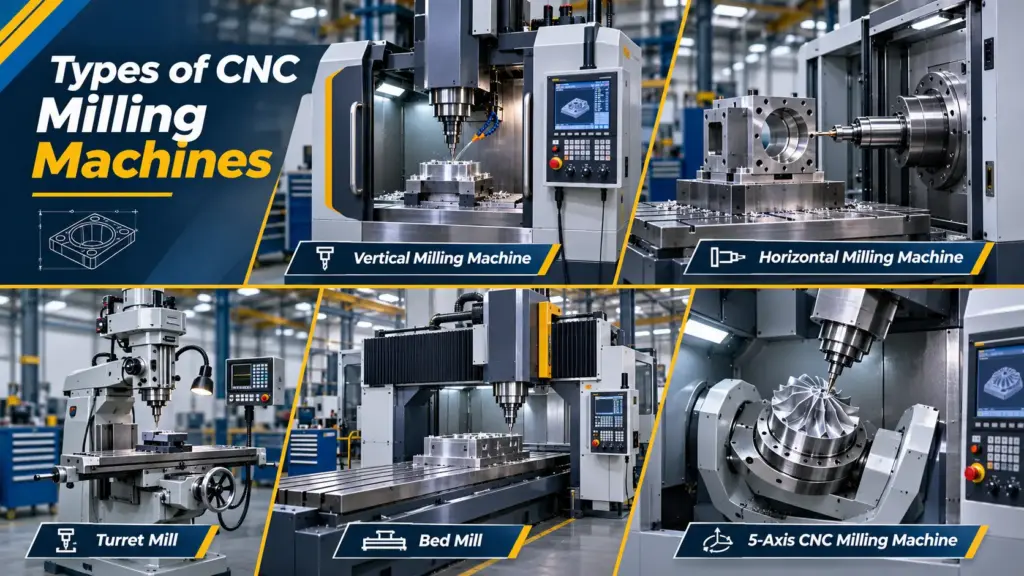
CNC milling machines are classified mainly by spindle orientation and by number of axes.
Vertical CNC Milling Machine
In a vertical CNC milling machine, the spindle is oriented up and down (along the Z-axis) and the tool plunges into the workpiece from above. It is the most common type of CNC mill.
- Best for: prototypes, flat parts, plates, molds, single-sided detailed work, small to medium batches
- Pros: lower cost, smaller footprint, easier to set up, beginner-friendly
- Cons: weaker chip evacuation in deep pockets, more setups for multi-sided parts
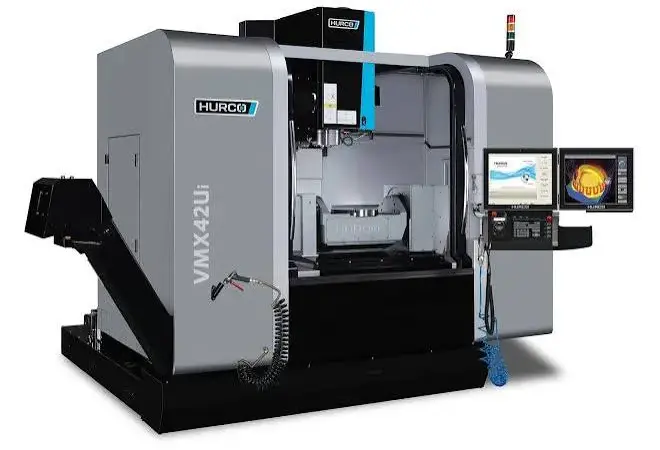
When a vertical mill has an automatic tool changer, enclosed guarding and high-speed spindle, it is usually called a vertical machining center (VMC).
Horizontal CNC Milling Machine
A horizontal CNC milling machine has a spindle that lies parallel to the table, so the cutter approaches the workpiece from the side. Tools are usually shorter and thicker, which makes heavy cuts more stable.
- Best for: high-volume production, heavy material removal, multi-sided parts, deep cavities
- Pros: excellent chip evacuation (chips fall away by gravity), better tool life, multiple faces machined in one setup using tombstone fixtures and a rotary table
- Cons: higher purchase and maintenance cost, larger footprint, needs more experienced operators
When fitted with a tool changer and pallet system, it is known as a horizontal machining center (HMC).
| Feature | Vertical Mill | Horizontal Mill |
|---|---|---|
| Spindle direction | Vertical (up–down) | Horizontal (sideways) |
| Cost | Lower | Higher |
| Footprint | Small | Large |
| Chip evacuation | Moderate | Excellent |
| Best for | Prototypes, single-sided parts | Mass production, multi-sided parts |
| Operator skill | Easier | More experienced |
CNC Gantry Milling Machine
A CNC gantry machine (also called a bridge-type mill) has a moving bridge that carries the spindle over a stationary table. Because the workpiece does not move, gantry mills can handle very large and heavy parts.
- Best for: large molds, aerospace panels, machine bases, wind-energy components, stone and large plates
- Pros: very large work envelope, high rigidity, stable for heavy workpieces
- Cons: expensive, needs significant floor space and foundation
Universal CNC Milling Machine
A universal mill can work in both vertical and horizontal orientations (or tilt its spindle or table), giving flexibility for varied jobs at the cost of higher price.
CNC Milling Machines by Number of Axes
The number of axes decides how complex a part the machine can produce in one setup.
| Axes | Movement | Typical Use |
|---|---|---|
| 3-axis | X, Y, Z linear movement | Flat parts, slots, pockets, drilling, simple 3D surfaces |
| 4-axis | 3-axis + rotation around X (A-axis) | Parts needing machining on multiple sides, cams, wrapped features |
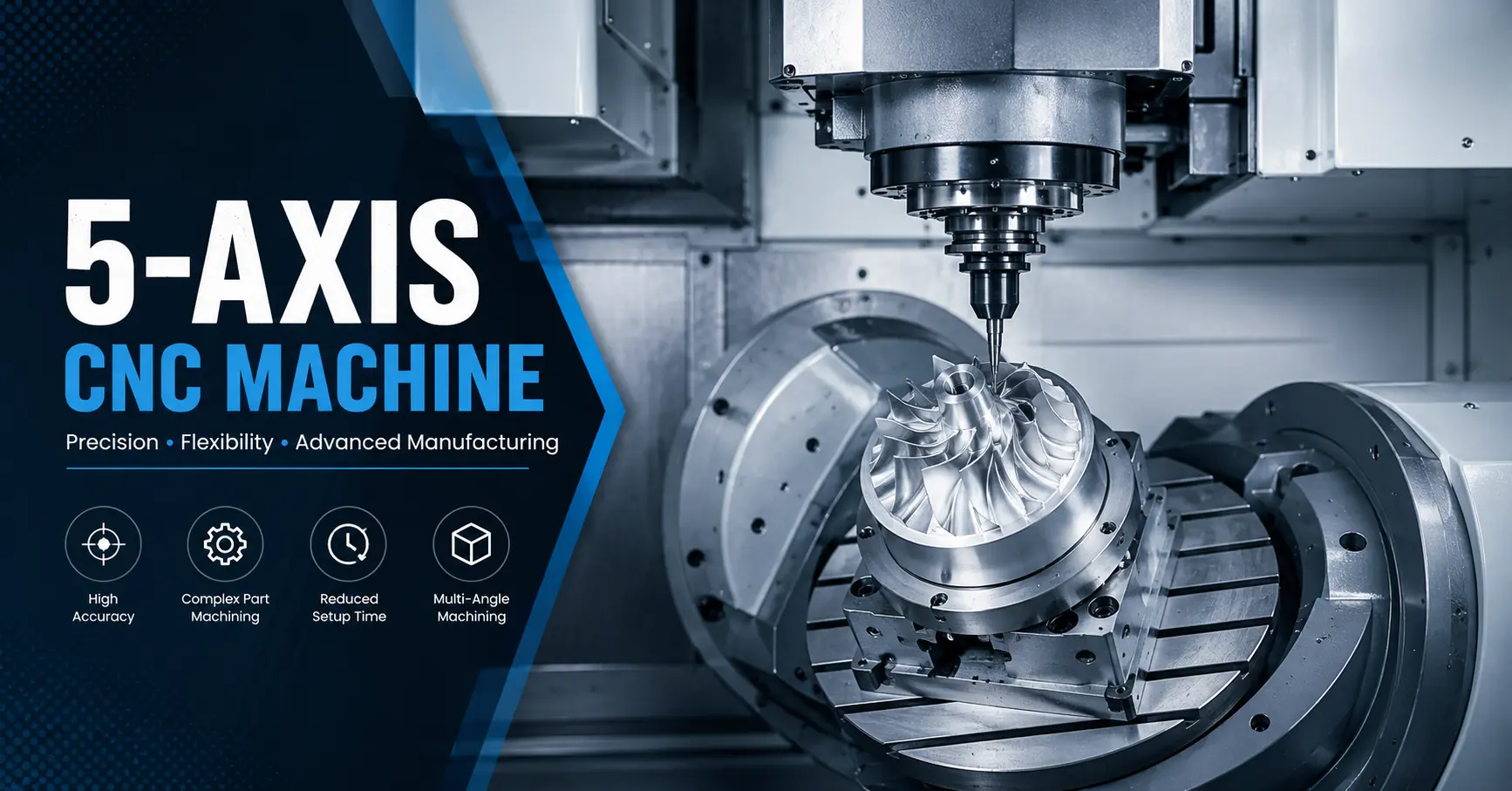
| 5-axis | 3-axis + two rotary axes (A/B/C) | Turbine blades, impellers, implants, complex molds |
More axes mean fewer setups, better accuracy between features and the ability to cut undercuts, but also higher machine and programming cost. For a detailed comparison, see our guide on 3 vs 4 vs 5 axis CNC machines.
What Operations Can a CNC Milling Machine Perform?
A CNC mill is a versatile machine. Besides cutting profiles and pockets, it handles several secondary operations that many buyers search for separately.
Drilling
CNC drilling creates round holes with a drill bit mounted in the spindle. A CNC mill can drill hundreds of holes at exact coordinates with peck-drilling cycles for deep holes, which is far faster and more accurate than manual drilling.
Tapping
CNC tapping cuts internal threads inside a drilled hole. Modern mills use rigid tapping, where the spindle rotation is synchronised with the Z-axis feed, so threads are clean and consistent. Thread milling is an alternative for larger or harder-material threads.
Boring
CNC boring enlarges an existing hole to a precise diameter and finish using a single-point boring bar. It is used where drilling alone cannot hold the required tolerance, such as bearing seats and engine components.
Gear Cutting
CNC gear cutting on a mill is done with form cutters or end mills, often with a 4th-axis rotary table for indexing. It suits prototypes, repairs and low-volume gears; high-volume gears are normally made on dedicated gear hobbing machines.
Other Common Milling Operations
- Face milling: produces a flat surface
- End milling / slotting: cuts slots, profiles and pockets
- Contouring and 3D surfacing: machines curved shapes and molds
- Chamfering and engraving: edge breaks, logos and part numbers
CNC Milling Machine vs Other Machines
| Machine | How it cuts | Best for |
|---|---|---|
| CNC milling machine | Rotating tool, stationary workpiece | Prismatic parts: blocks, plates, housings, molds |
| CNC lathe | Rotating workpiece, stationary tool | Cylindrical parts: shafts, pins, bushings |
| CNC router | Rotating tool on a large gantry | Wood, plastics, foam, soft metals, sheet material |
| CNC machining center | Mill with ATC and enclosure for automation | Production milling with minimal operator involvement |
| Mill-turn machine | Combines milling and turning | Complex round parts finished in one setup |
See also: CNC Lathe Machine, CNC Router Machine, CNC Machining Center, CNC Mill-Turn Machine.
Materials You Can Machine on a CNC Mill
- Metals: aluminium, mild steel, tool steel, stainless steel, titanium, brass, copper
- Plastics: ABS, nylon, acetal (Delrin), PEEK, polycarbonate
- Others: wood, composites, graphite, machinable wax
Material choice affects spindle speed, feed rate, tool coating and coolant use. Rigid machines with powerful spindles are needed for steel and titanium.
Applications of CNC Milling Machines
- Aerospace: structural brackets, turbine components, housings
- Automotive: engine blocks, cylinder heads, prototypes, fixtures
- Medical: orthopaedic implants, surgical instruments
- Mold and die: injection molds, forging and casting dies
- Electronics: heat sinks, enclosures, connector housings
- General engineering: jigs, fixtures, spare parts, tooling
Advantages and Limitations
Advantages
- High accuracy and repeatability
- Can produce complex 3D shapes
- Works with a wide range of materials
- Reduces manual error and labour
- Suitable for prototypes and production
- Can run unattended with automation
Limitations
- High initial investment
- Needs skilled programmers and operators
- Material waste (subtractive process)
- Tooling, coolant and maintenance costs
- Not ideal for very large volumes of simple parts where casting or stamping is cheaper
How Much Does a CNC Milling Machine Cost?
Prices vary widely by size, axes, spindle and brand. As a rough guide (approximate global market ranges, not quotes):
| Category | Approximate Price (USD) |
|---|---|
| Desktop / hobby CNC mill | $2,000 – $10,000 |
| Entry-level industrial vertical mill / VMC | $25,000 – $80,000 |
| Mid-range VMC with ATC | $80,000 – $200,000 |
| Horizontal machining center | $150,000 – $500,000+ |
| 5-axis machine | $150,000 – $600,000+ |
| Large gantry mill | $200,000 – $1,000,000+ |
Also budget for tooling, workholding, CAM software, installation, training, coolant, and yearly maintenance. Always confirm current prices with suppliers in your region.
How to Choose the Right CNC Milling Machine
- Part size and weight: check the X, Y, Z travel and table load capacity.
- Material: harder metals need rigid construction and high torque spindles.
- Accuracy needs: check positioning accuracy and repeatability specifications.
- Number of axes: 3-axis for simple parts, 4/5-axis for complex geometry.
- Spindle: power (kW), maximum RPM and taper type (BT30, BT40, CAT40, HSK).
- Tool changer capacity: more tool pockets allow longer unattended runs.
- Controller: choose one your team can program and service (Fanuc, Siemens, Haas, etc.).
- Production volume: low volume suits a vertical mill; high volume suits an HMC with pallets.
- Brand support: availability of service, spare parts and training locally.
- Total cost of ownership: not only purchase price but running and maintenance cost.
Basic Maintenance Tips
- Clean chips and coolant sludge daily
- Lubricate ways and ball screws on schedule
- Check coolant concentration and level
- Inspect spindle taper and tool holders for wear
- Verify axis backlash and alignment periodically
- Keep the machine in a clean, temperature-stable environment
Frequently Asked Questions
What does a CNC milling machine do?
It cuts, drills, shapes and finishes solid materials into precise parts using a rotating cutter controlled by a computer program.
What is the difference between a CNC mill and a CNC lathe?
A mill rotates the cutting tool and holds the workpiece still, making flat and complex shapes. A lathe rotates the workpiece against a fixed tool, making round, cylindrical parts.
What is the difference between a CNC milling machine and a machining center?
A machining center is an advanced CNC mill with an automatic tool changer and enclosure, built for production work. All machining centers are CNC mills, but not all CNC mills are machining centers.
Which is better: vertical or horizontal CNC milling?
Vertical is better for prototypes, smaller budgets and single-sided parts. Horizontal is better for high-volume, multi-sided and heavy-cutting jobs.
How many axes should a CNC milling machine have?
Three axes are enough for most flat and prismatic parts. Choose 4 or 5 axes when you need multi-sided machining, complex curves or fewer setups.
How accurate is a CNC milling machine?
Typical industrial machines hold ±0.01 mm to ±0.025 mm, and high-precision machines can do better under controlled conditions.
Can a CNC mill cut steel and titanium?
Yes, but it requires a rigid machine, a high-torque spindle, correct tooling and proper coolant.
Conclusion
A CNC milling machine is the core of modern machining. It turns digital designs into accurate physical parts by removing material with a rotating cutter. Vertical mills suit prototypes and general work, horizontal mills suit high-volume production, gantry mills handle very large parts, and 4- or 5-axis machines reduce setups for complex geometry. Match the machine to your part size, material, accuracy and volume, and you will get the best return on your investment.