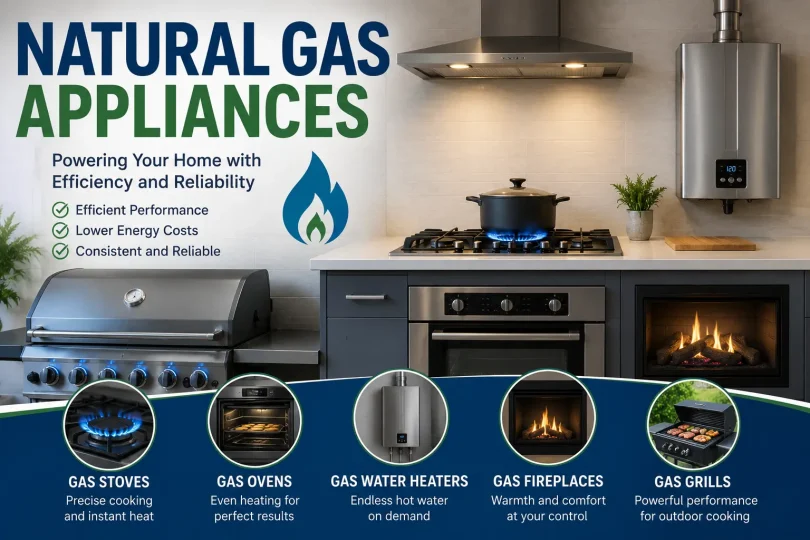

Natural gas appliances have become a staple in modern homes, offering faster heat, lower operating costs, and reliable performance even during power outages. From the kitchen to the backyard, natural gas powers some of the most trusted appliances homeowners rely on every day.
This guide takes a close look at five of the most searched natural gas appliances: the natural gas stove, the natural gas patio heater, the natural gas hot water heater, the natural gas tankless water heater, and the Weber natural gas grill. Each section explains how the appliance works, what makes it worth considering, and what to watch out for before you buy.
TL;DR Summary
Natural gas appliances, including stoves, patio heaters, water heaters, and grills, generally cost less to run than electric models and heat faster because they generate instant, adjustable heat. Natural gas stoves give cooks precise flame control, natural gas patio heaters and grills provide a permanent, tank-free fuel source for outdoor living, and natural gas water heaters, both tank and tankless, deliver hot water more efficiently than electric units. The main trade offs are higher upfront installation costs, the need for an existing gas line, and basic safety precautions around ventilation and leak detection.
Quick Facts Box
| Appliance | Typical Fuel Connection | Key Advantage | Main Consideration |
|---|---|---|---|
| Natural Gas Stove | Direct gas line | Instant, adjustable heat | Requires gas line hookup |
| Natural Gas Patio Heater | Direct gas line | Unlimited fuel, no refills | Fixed installation location |
| Natural Gas Hot Water Heater | Direct gas line | Fast recovery, lower cost | Tank takes up storage space |
| Natural Gas Tankless Water Heater | Direct gas line | Endless hot water, saves space | Higher upfront cost |
| Weber Natural Gas Grill | Direct gas line | Never runs out of fuel mid-cook | Not portable once installed |
What Are Natural Gas Appliances?
Natural gas appliances are any household devices designed to run on natural gas delivered through an underground pipeline rather than electricity or a stored fuel like propane. Because natural gas is piped continuously into the home, these appliances never need refueling, tank monitoring, or delivery scheduling. Common examples include stoves, ovens, furnaces, water heaters, fireplaces, clothes dryers, and outdoor equipment like grills and patio heaters.
The biggest appeal of natural gas appliances is the combination of cost and performance. Natural gas is typically cheaper per unit of energy than electricity, and gas-powered appliances tend to heat faster and offer more precise control. Many models can also continue operating during a power outage, since they do not rely on the electrical grid for their core heating function, though some newer units still need a small amount of electricity for ignition or electronic controls.
Natural Gas Stove
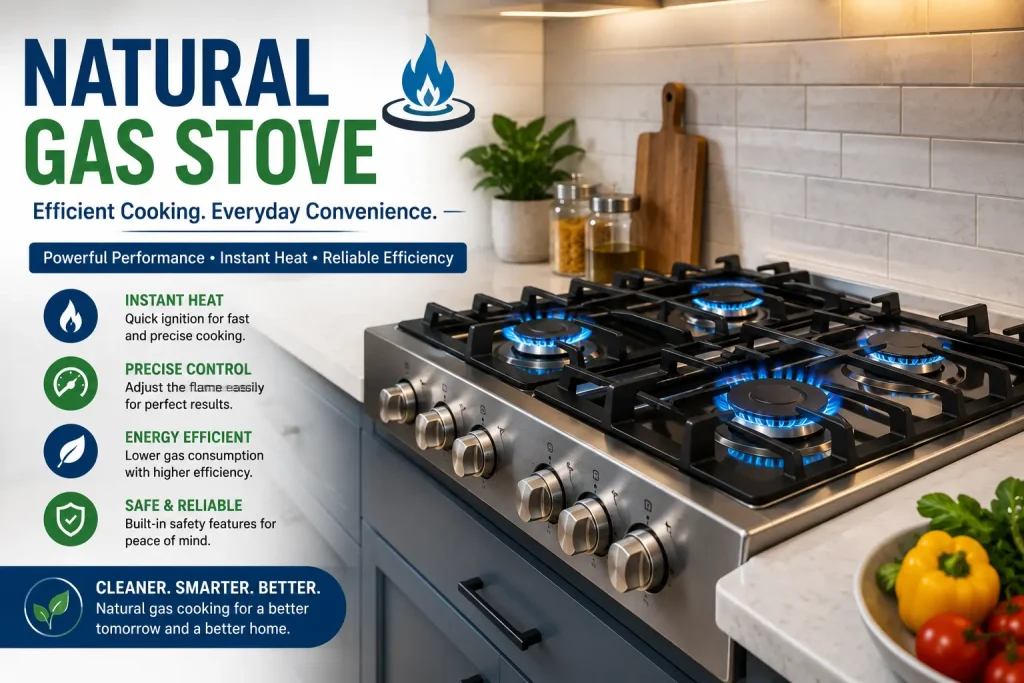
A natural gas stove is one of the most popular kitchen upgrades for home cooks and professional chefs alike, and for good reason.
Why Cooks Prefer Natural Gas Stoves
Gas stoves deliver instant heat the moment the burner is lit, with no warm-up delay. More importantly, they offer precise, visual flame control, allowing cooks to adjust temperature immediately by simply turning a knob. This responsiveness makes techniques like searing, simmering, and flambéing far easier compared to electric coil or even most induction stoves.
Cost and Efficiency
Natural gas is generally less expensive per unit of energy than electricity, which means a gas stove often costs less to operate over time despite a similar or sometimes higher upfront purchase price. Because the flame heats cookware directly rather than through an electric coil, less energy is wasted in the process.
Things to Consider
Gas stoves require a nearby gas line, and installation costs can be significant if your kitchen is not already equipped for it. They also produce a small amount of indoor combustion byproducts, so proper ventilation, such as a range hood vented to the outside, is strongly recommended. Regular cleaning of burner ports also helps maintain even flame distribution and safe operation.
Natural Gas Patio Heater
A natural gas patio heater extends the usability of an outdoor space well into cooler months by providing continuous, on-demand warmth without the hassle of fuel tanks.
How It Works
Unlike propane patio heaters, which run off a portable tank, a natural gas patio heater connects directly to your home’s existing gas line. This means it draws fuel continuously and never needs to be refilled or swapped out mid-gathering, making it a convenient choice for homeowners who entertain outdoors frequently.
Natural Gas vs Propane Patio Heaters
Propane patio heaters are more portable and often produce a slightly higher heat output per unit of fuel, making them popular for renters or anyone who needs to move the heater around. Natural gas patio heaters, on the other hand, are generally more cost effective to run over time and eliminate the recurring task of monitoring or replacing tanks. The trade off is that natural gas models require a fixed, professionally installed gas line connection, so they are best suited for permanent outdoor living spaces rather than areas that need flexibility.
Installation and Safety Tips
Because natural gas patio heaters require a dedicated gas line, installation typically involves a licensed plumber or gas technician. Once installed, these heaters should always be used in open or well-ventilated outdoor areas, since they produce carbon monoxide as a byproduct of combustion, and manufacturers generally recommend at least a few feet of clearance around the unit from any flammable materials.
Natural Gas Hot Water Heater
A natural gas hot water heater remains one of the most common and cost-effective ways to supply a home with a steady stream of hot water.
How Natural Gas Water Heaters Work
A traditional natural gas hot water heater stores a large volume of water, typically between 30 and 60 gallons, in an insulated tank and keeps it heated to a set temperature so it is ready whenever a faucet is turned on. A gas burner beneath the tank heats the water, and the unit refills and reheats automatically as hot water is used.
Why Homeowners Choose Gas Over Electric
Natural gas hot water heaters generally heat water faster than electric models and can heat close to twice the volume of water in the same amount of time. They also tend to cost less to operate on a monthly basis, since natural gas is usually cheaper than electricity per unit of delivered heat, and many gas water heaters continue to function during a power outage since the burner does not rely on electricity.
Maintenance and Lifespan
A typical natural gas hot water heater lasts around 8 to 12 years with proper care. Sediment can build up in the tank over time, which reduces efficiency and can shorten the unit’s lifespan, so annual flushing is recommended. The anode rod inside the tank, which prevents corrosion, should also be inspected periodically and replaced as needed.
Natural Gas Tankless Water Heater
A natural gas tankless water heater takes a fundamentally different approach to hot water, heating water only when it is needed rather than storing a constant reserve.
How Tankless Technology Works
Instead of maintaining a tank of hot water at all times, a natural gas tankless water heater ignites a burner the moment a hot water tap is opened, passing cold water through a heat exchanger that raises its temperature almost instantly. Once the tap is closed, the unit stops heating, eliminating the standby energy loss associated with traditional tank models.
Advantages Over Tank Models
Because they only heat water on demand, natural gas tankless water heaters tend to be more energy efficient than tank-style units, which constantly reheat stored water even when no one is using it. They also provide a continuous, essentially unlimited supply of hot water, which is especially useful for larger households running multiple showers, a washing machine, and a dishwasher at the same time. Tankless units are also more compact, mounting on a wall rather than taking up floor space, and with proper maintenance many last 20 years or more, nearly double the lifespan of a typical tank water heater.
What to Know Before Switching
Natural gas tankless water heaters usually have a higher upfront cost than tank models once you factor in both the unit and installation, and switching from a tank to a tankless system can require upgrading your gas line, venting, or plumbing to handle the increased demand. Annual descaling is also recommended, particularly in areas with hard water, to keep the heat exchanger running efficiently.
Weber Natural Gas Grill
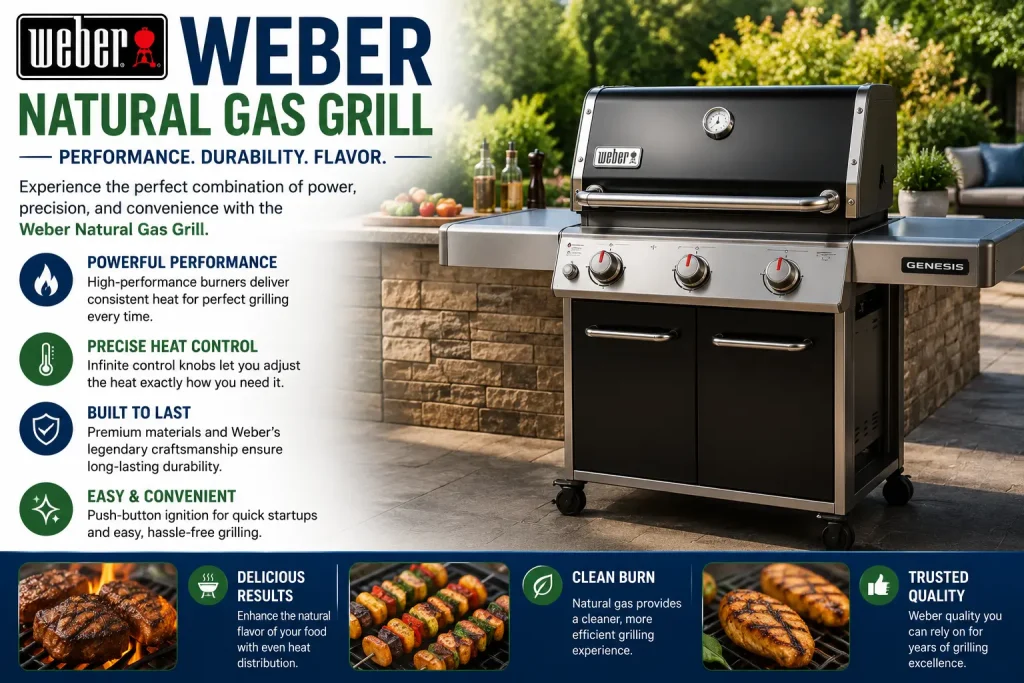
Weber is one of the most recognized names in outdoor grilling, and many of its most popular gas grill lines are available in a natural gas configuration for homeowners who want a permanent, tank-free setup.
Why Choose a Weber Natural Gas Grill
A Weber natural gas grill connects directly to a home’s gas line, meaning it never runs out of fuel mid-cook and eliminates the need to monitor or swap propane tanks. This makes it a popular choice for homeowners who grill frequently and have an outdoor kitchen or patio area already close to a gas line. Weber’s core lineups, including the entry-level Spirit series and the larger, more feature-rich Genesis series, are both offered in natural gas versions alongside their propane counterparts.
Choosing Between Weber Grill Lines
The Weber Spirit series is generally the more budget-friendly option, offering solid build quality, dependable burners, and enough cooking space for smaller households or occasional grilling. The Weber Genesis series steps up in cooking area, burner output, and extra features such as side burners and sear zones, making it a strong option for those who grill often or entertain larger groups. Both lines can typically be ordered directly in a natural gas configuration, so it is worth confirming fuel type before purchase rather than assuming a conversion will be included.
Converting a Propane Weber Grill to Natural Gas
Some homeowners choose to convert an existing propane Weber grill to run on natural gas instead, using a manufacturer-approved conversion kit that swaps the regulator, hose, and burner orifices to match natural gas pressure and flow requirements. While these kits are widely available, conversions should always follow the manufacturer’s instructions closely or be performed by a qualified technician, since propane and natural gas operate at different pressures and using the wrong orifice size can affect both performance and safety.
Natural Gas Appliances vs Electric: A Quick Comparison
Across nearly every appliance category covered above, natural gas models share a few consistent advantages over electric alternatives: faster heat-up times, more precise temperature control, generally lower operating costs, and the ability to keep functioning during a power outage. Electric appliances, on the other hand, often have lower upfront installation costs when no existing gas line is available and can be a simpler option in homes without gas service. The right choice ultimately depends on whether your home already has a natural gas connection, your local utility rates, and how much you value the specific performance benefits each fuel type offers.
Safety Tips for Natural Gas Appliances
Natural gas appliances are safe and reliable when properly installed and maintained, but a few precautions go a long way:
- Have all natural gas appliances installed and serviced by a licensed professional.
- Install carbon monoxide detectors near gas appliances, especially water heaters, stoves, and indoor fireplaces.
- Keep outdoor appliances like patio heaters and grills a safe distance from siding, railings, and other flammable materials.
- Learn to recognize the smell of natural gas, an added rotten egg odor from a chemical called mercaptan, and know how to respond to a suspected leak.
- Schedule annual maintenance for water heaters and other appliances that run frequently to catch small issues before they become costly repairs.
Frequently Asked Questions
Are natural gas appliances cheaper to run than electric appliances?
In most markets, yes. Natural gas is generally less expensive per unit of energy than electricity, so natural gas stoves, water heaters, and heaters typically cost less to operate over time, even though some models have a higher upfront purchase or installation price.
Can I convert an electric appliance to run on natural gas?
Some appliances, like grills and certain water heaters, can be converted between fuel types using manufacturer-approved kits, but many electric appliances cannot be converted at all. It is best to check with the manufacturer before assuming a conversion is possible.
Is a natural gas tankless water heater worth the extra cost?
For households with high or frequent hot water demand, a tankless unit often pays off through energy savings and a longer lifespan. For smaller households or lower usage, a traditional tank water heater may offer a better return given its lower upfront cost.
Do natural gas grills need a special hookup?
Yes, a natural gas grill needs to be connected to a home’s existing natural gas line, typically through a dedicated quick-connect fitting installed by a professional, unlike propane grills which run off a portable tank.
Is it safe to use a natural gas patio heater on a covered patio?
Most natural gas patio heaters are safe for covered or partially enclosed outdoor spaces as long as there is adequate ventilation, since these units produce carbon monoxide during combustion and should never be used in fully enclosed indoor areas.
Final Thoughts
Natural gas appliances, from the responsive flame of a natural gas stove to the always-ready warmth of a natural gas patio heater or Weber natural gas grill, offer a compelling mix of performance, convenience, and long-term savings. Whether you are deciding between a traditional natural gas hot water heater and a natural gas tankless water heater, or simply weighing gas against electric for your next kitchen upgrade, the right choice comes down to your home’s existing gas access, your household’s usage patterns, and how much you value fast, precise, on-demand heat. With proper installation and routine maintenance, natural gas appliances remain one of the most dependable choices for modern homes.
References
- U.S. Energy Information Administration (EIA)
- American Gas Association (AGA)
- Consumer Reports
You May Also Like It:
CNC Machining Tolerances: The Complete Expert Guide
Prototype CNC Machining: The Complete Expert Guide
Steel Grade: The Complete Guide to Understanding Every Type of Steel