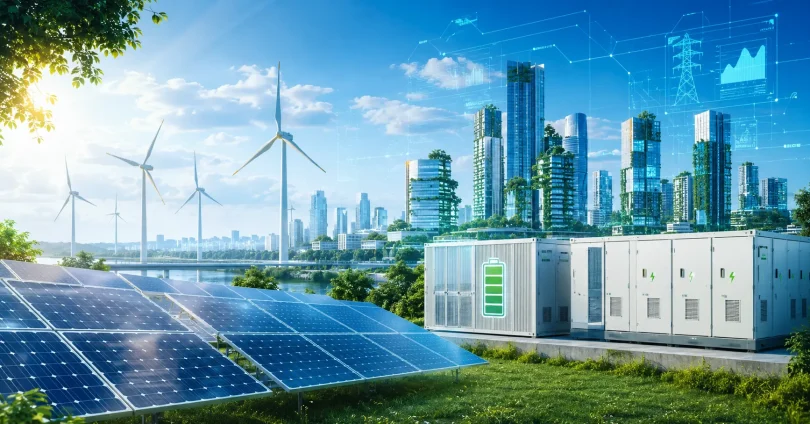

Energy technology is the set of systems, tools, and digital platforms used to generate, store, distribute, and consume power more efficiently. It spans renewable sources like solar and wind, storage systems such as lithium-ion batteries, and smart grids that use AI and automation to balance supply with demand in real time. Unlike traditional power systems which move electricity in one direction from a central plant to the end user modern energy technology is distributed, data-driven, and built to adapt instantly to changing demand, covering everything from rooftop solar to large-scale grid storage and clean fuels like hydrogen.
What Is Energy Technology?
Energy technology is the field of science and engineering focused on generating, converting, storing, distributing, and using energy more efficiently and sustainably. It combines hardware such as solar panels, batteries, and turbines with software systems that monitor, automate, and optimize how energy flows through a grid, building, vehicle, or device.
In simple terms, energy technology answers one question: how do we produce and use power in the smartest, cleanest, and most reliable way possible?
It includes innovations such as:
- Solar photovoltaic systems and wind turbines
- Battery storage and grid scale energy storage
- Smart grids and digital energy management platforms
- Hydrogen fuel cells and clean fuel production
- Nuclear and advanced reactor technology
- Energy efficient industrial and building systems
Energy technology is not a single invention. It is an entire ecosystem of tools working together to keep power flowing while reducing cost, waste, and environmental impact.
Energy and Power Technology Definition Explained
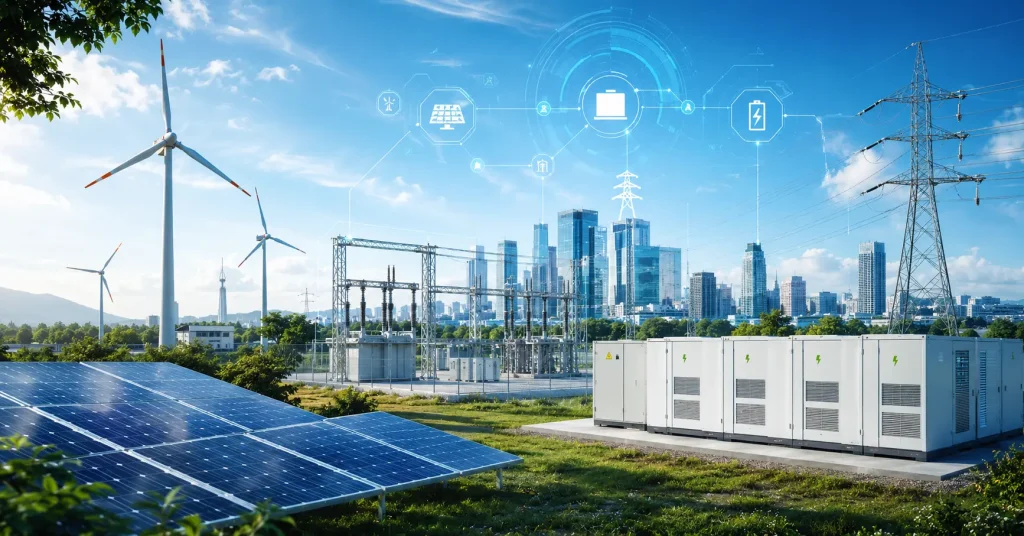
The terms “energy technology” and “power technology” are often used interchangeably, but they describe different parts of the same system:
- Energy technology creates and stores power solar panels, wind turbines, batteries.
- Power technology transmits, converts, and manages that power once it exists transformers, inverters, transmission networks.
Together, they form the full lifecycle of electricity: generation, transmission, distribution, and consumption. Modern systems add a digital layer on top of this software that analyzes demand in real time, predicts usage patterns, and automatically adjusts supply to avoid waste. This is why the field today is best described as an integrated ecosystem of hardware and software, not just physical infrastructure.
In practice: picture a modern building with rooftop solar generating electricity, a battery storing the surplus, and a smart meter tracking consumption. Software then decides in real time whether to use stored power, pull from the grid, or export excess back to it. That entire loop from generation to intelligent distribution is energy and power technology working as one system, whether at the scale of a single home or a national grid.r technology is described as an integrated ecosystem of hardware and software rather than physical infrastructure alone.
Main Types of Energy Technology
Renewable Energy Technology
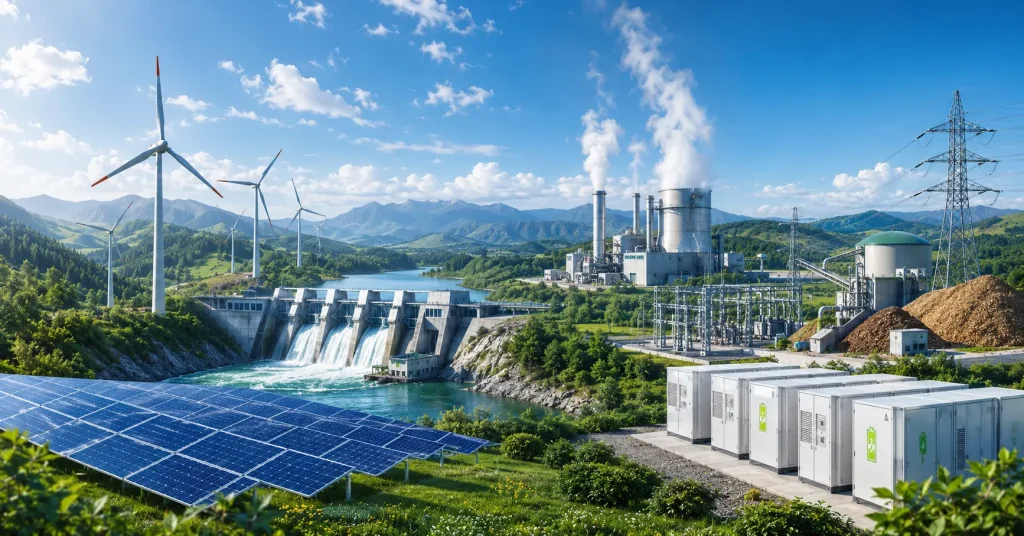
Solar, wind, hydro, and geothermal systems convert natural resources into usable electricity without burning fossil fuels. Advances in panel efficiency, turbine design, and materials science have made renewables among the cheapest sources of new electricity generation in many markets which is part of why global investment in solar alone is now outpacing investment in oil production, according to the IEA’s 2025 World Energy Investment report.
Energy Storage Technology
Storage addresses renewable energy’s biggest weakness: the sun doesn’t always shine and the wind doesn’t always blow. Lithium-ion batteries, next-generation solid-state batteries, and large-scale grid storage systems store excess energy for use when generation drops. Storage is now considered just as critical as generation in building a reliable power system.
Smart Grid and Digital Energy Technology
A smart grid uses sensors, software, and automation to monitor electricity flow in real time, detect faults, reroute power during outages, and balance supply with demand automatically. This AI-powered layer is what allows modern grids to handle unpredictable demand spikes including the rapid growth in electricity use from data centers and AI computing.
Nuclear and Advanced Power Technology
Traditional nuclear plants and newer small modular reactors (SMRs) provide constant, carbon-free electricity. Because they aren’t weather-dependent, they play a growing role in balancing intermittent renewable sources within a national energy mix.
Hydrogen and Clean Fuel Technology
Hydrogen produced using renewable electricity, along with other low-carbon fuels, is being developed to power industries that are hard to electrify directly heavy manufacturing, shipping, and aviation.
Energy Efficiency Technology
Not all energy technology is about producing new power. Efficiency technology focuses on getting the same result with less energy, through smarter building design, industrial automation, and efficient appliances. Reducing demand is often the fastest and cheapest way to improve an energy system.
How Energy Technology Actually Works
Every modern energy technology system follows a similar cycle:
- Generation – Energy is produced from a source such as sunlight, wind, water, or nuclear reaction.
- Conversion – Raw energy is converted into usable electricity through turbines, inverters, or generators.
- Storage – Surplus energy is stored in batteries or other systems for later use.
- Transmission and Distribution – Power moves through transmission lines and local distribution networks to homes, businesses, and industries.
- Monitoring and Optimization – Software and sensors track consumption patterns and automatically balance supply with demand to reduce waste and prevent outages.
This cycle runs continuously, adjusting in real time as weather, demand, and grid conditions change.er, demand, and grid conditions change.
Why Energy Technology Matters in 2026
Energy has moved from a background utility to a central strategic issue for governments, businesses, and households. According to the International Energy Agency, global investment in clean energy technologies has been rising sharply, driven by the need for energy security, cost control, and the surging electricity demand created by artificial intelligence and data centers. Countries and companies that master energy technology gain a direct advantage in cost, reliability, and competitiveness.
For individuals, better energy technology means lower electricity bills, fewer power outages, and cleaner air. For businesses, it means predictable operating costs and resilience against grid disruptions. For the planet, it means a realistic path toward reducing carbon emissions without sacrificing economic growth.
Real World Applications of Energy Technology
- Homes use rooftop solar combined with battery storage to cut electricity bills and stay powered during outages.
- Factories use energy management software to track consumption across machinery and reduce waste automatically.
- Electric vehicles rely on advanced battery technology and charging infrastructure built on the same principles as grid storage.
- Data centers use energy technology to manage the enormous and rapidly growing power demand created by artificial intelligence workloads.
- Cities use smart grids to prevent blackouts, reroute power during emergencies, and support electric public transport.
Latest Trends in Energy Technology
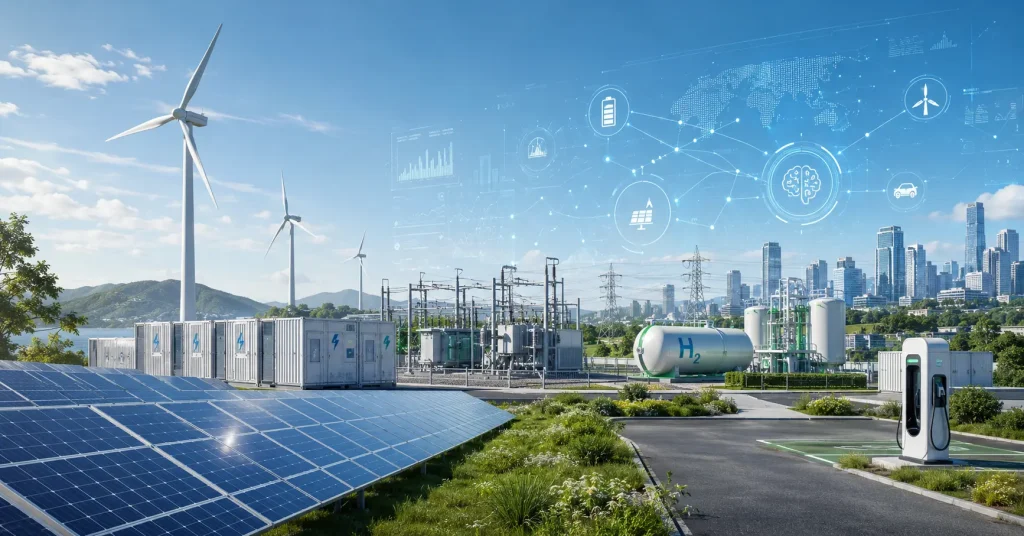
Several trends are shaping the direction of energy technology going into the second half of the decade:
- Artificial intelligence is being used to predict electricity demand, detect equipment failures before they happen, and automatically balance power across a grid.
- Energy demand from AI data centers is growing faster than traditional grid infrastructure can expand, pushing utilities to invest heavily in smarter, faster demand response systems.
- Battery costs continue to fall while storage capacity increases, making renewable energy more reliable around the clock.
- Governments are competing to build resilient domestic supply chains for clean energy components rather than depending on a single global supplier.
- A mixed energy strategy combining renewables, storage, advanced nuclear, hydrogen, and carbon capture is increasingly seen as the realistic path forward, since no single technology can meet global energy needs alone.
Energy Technology vs Traditional Power Systems
| Feature | Traditional Power Systems | Modern Energy Technology |
|---|---|---|
| Structure | Centralized, one direction flow | Distributed, multi directional flow |
| Monitoring | Manual or delayed | Real time, automated |
| Flexibility | Limited | High, adjusts to demand instantly |
| Data Use | Minimal | Central to operation |
| Resilience | Vulnerable to single point failure | Designed for redundancy and self healing |
Challenges Facing Energy Technology
Energy technology is advancing quickly, but real challenges remain:
- Aging infrastructure – Grids in many regions were built decades ago and struggle to handle the speed and scale of new demand, particularly from AI computing.
- Storage costs – Storage technology is improving but remains expensive at the scale needed for entire national grids.
- Supply chain concentration – Critical materials like lithium and rare earth elements remain concentrated in a small number of countries, creating supply risk.
- Policy uncertainty – Long-term energy projects depend on stable regulation, and shifting policy affects investment decisions.
- Uneven global access – Investment in clean energy remains heavily skewed toward wealthier nations, leaving many developing regions behind despite urgent need.
The Future of Energy and Power Technology
The future points toward a fully integrated system where generation, storage, and consumption are managed automatically through software and artificial intelligence. Expect wider adoption of solid state batteries with higher energy density, continued growth in small modular nuclear reactors, expansion of hydrogen for hard to electrify industries, and smart grids capable of predicting and preventing outages before they occur.
The defining shift is that energy technology is no longer just about producing power. It is about producing, storing, and deploying power intelligently, with every unit of electricity tracked and optimized for both performance and sustainability.
Frequently Asked Questions
What is energy technology?
Energy technology is the combination of engineering and digital systems used to generate, store, distribute, and efficiently use power, including solar, wind, batteries, smart grids, and nuclear systems.
What is energy and power technology?
It is the complete lifecycle of electricity, covering how energy is generated, converted, transmitted, and consumed, supported by software that manages and optimizes the entire process.
How is technology and energy connected?
Technology and energy are directly connected because modern digital tools such as sensors, automation, and artificial intelligence are now essential for managing how energy is produced, stored, and delivered efficiently.
What is the difference between energy technology and power technology?
Energy technology focuses on generating and storing power, while power technology focuses on transmitting, converting, and controlling that power once it exists. In practice, the two work together as one system.
Why is energy technology important right now?
Rising electricity demand from AI, data centers, and electric vehicles, combined with the need for energy security and lower emissions, has made energy technology one of the most important sectors in the global economy.
Conclusion
Energy technology sits at the center of how the modern world produces, stores, and uses power. It spans renewable generation, battery storage, smart grids, nuclear innovation, and the software systems that tie everything together. Understanding both energy technology and power technology gives a complete picture of how electricity moves from source to socket, and why this field will only grow more important as global demand for reliable, clean power continues to rise.
You May Also Like It:
CNC Machining Tolerances: The Complete Expert Guide
MIG vs TIG Welding: Complete Guide to Differences and Procedures