
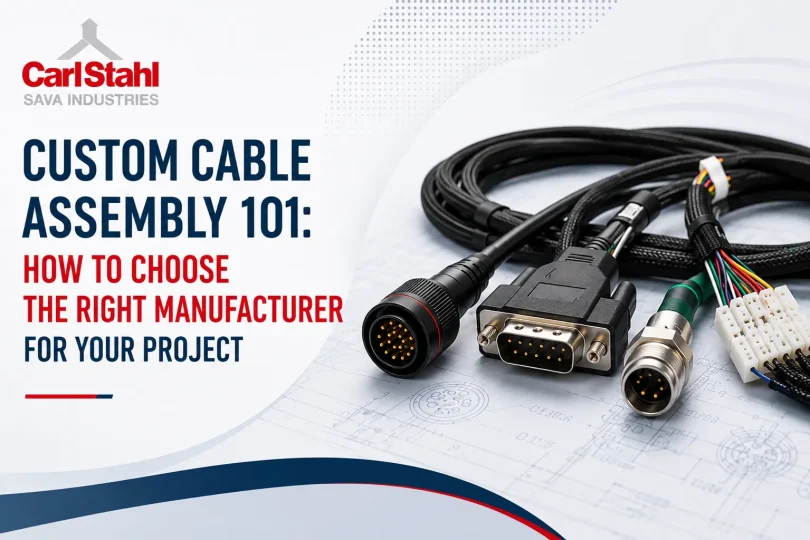

Choosing the right cable assembly manufacturer can have a direct impact on product performance, reliability, installation, and long-term maintenance. Whether you are developing industrial equipment, automation systems, lifting equipment, or specialized machinery, the cable assembly needs to match the actual requirements of the application.
A custom cable assembly is not simply a cable cut to a specific length. It can involve the right cable construction, end fittings, termination methods, dimensions, materials, and testing requirements. Working with an experienced manufacturer early in the project can help avoid design problems and unnecessary production delays.
Start With the Application Requirements
Before contacting a manufacturer, define how the cable will be used. Consider factors such as load requirements, movement, operating environment, available installation space, expected service life, and exposure to moisture, chemicals, abrasion, or temperature changes.
The application also determines whether you need a standard configuration or a specialized mechanical cable assembly. Providing these details at the beginning gives the manufacturer a clearer understanding of what the finished assembly needs to accomplish.
Understand the Cable Assembly Design Process
A reliable manufacturer should have a structured cable assembly design process rather than simply producing components from a basic drawing.
The process typically begins with understanding the application and design requirements. The manufacturer can then evaluate cable construction, dimensions, fittings, termination options, and other specifications before moving toward production.
A collaborative design process is particularly useful when the project involves tight space limitations, unusual routing, repeated movement, or specific performance requirements. Reviewing the design before production can also help identify potential issues before they become costly manufacturing problems.
Look for Customization Capabilities
Every application does not fit a standard cable configuration. Depending on the equipment, you may require specific lengths, end connections, cable constructions, or other modifications.
This is where custom cable assembly capabilities become important. A manufacturer with customization experience can work from your drawings, specifications, samples, or application requirements to develop an assembly suited to the project.
Customization can also make installation easier by providing components that are prepared for the way they will actually be installed and used.
Evaluate Manufacturing Experience
Experience matters when selecting a cable assembly supplier. Look beyond how long a company has been operating and consider whether it understands the types of applications similar to yours.
A capable manufacturer should be able to discuss material selection, cable construction, termination methods, tolerances, and application-specific requirements. They should also be willing to communicate with your engineering or purchasing team throughout the project.
For projects involving demanding mechanical applications, experience with a Mechanical Cable Assembly can be especially valuable. Understanding how the cable will interact with the surrounding equipment is just as important as selecting the cable itself.
Ask About Quality and Testing
Quality control should be part of the manufacturing process from design through final production. Ask potential suppliers how they inspect finished assemblies and how they maintain consistency between production runs.
Depending on the application, important considerations may include dimensional inspection, termination quality, load-related requirements, material verification, and other application-specific checks.
A manufacturer that takes quality seriously should be able to explain its inspection and production procedures clearly instead of treating quality control as an afterthought.
Consider Communication and Lead Times
A technically capable manufacturer may still be difficult to work with if communication is poor. During the selection process, pay attention to how quickly the supplier responds to questions and whether they understand your requirements.
It is also worth discussing production quantities, expected lead times, prototype requirements, and future volume needs. A good supplier should be able to support the project as it moves from an initial concept to repeat production.
Choose a Manufacturer That Can Support the Whole Project
The best cable assembly supplier is not necessarily the one offering the lowest initial price. A manufacturer that helps with design, material selection, customization, production, and quality control can provide more value throughout the project.
Before choosing a supplier, review their manufacturing capabilities, design expertise, customization options, and experience with similar applications. This can help you determine whether they are equipped to handle both your current requirements and future production needs.
Final Thoughts
Selecting a cable assembly manufacturer should start with the application rather than the price alone. Consider the manufacturer’s design capabilities, customization options, production experience, quality processes, communication, and ability to meet your project requirements.
When these factors are evaluated early, you have a better chance of choosing a cable assembly that performs reliably and fits the equipment as intended. For specialized applications, partnering with an experienced manufacturer can make the entire development and production process more efficient.






[…] Custom Cable Assembly 101: How to Choose the Right Manufacturer for Your Project […]