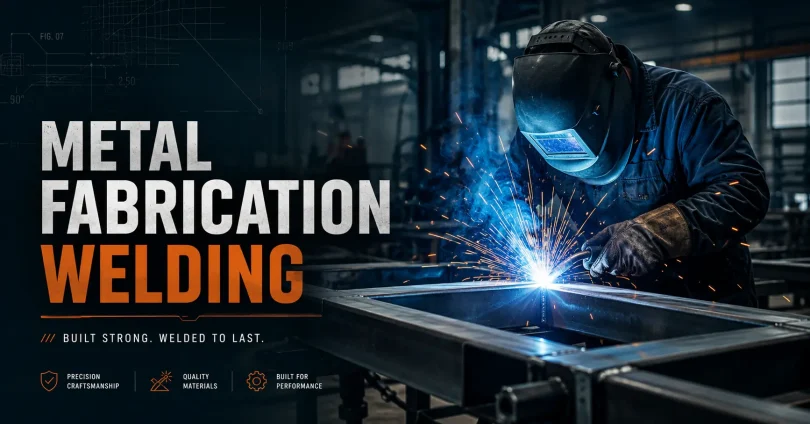

Metal fabrication welding sits behind almost everything built from steel or aluminum, from the frame of a delivery truck to the beams holding up a warehouse roof. Yet most people, including many buyers hiring a fabrication shop for the first time, only have a fuzzy idea of what actually happens between “raw metal” and “finished part.”
This guide clears that up. We will walk through what metal fabrication welding actually involves, the main welding methods used across the industry, how to judge quality, what drives cost, and the questions you should ask before hiring a shop. We will also cover the parts most guides skip: common weld defects, real cost drivers, and a practical checklist for vetting a fabricator.
What Is Metal Fabrication Welding?
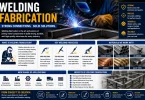
Metal fabrication welding refers to the combined process of shaping raw metal stock into a finished structure or component, where welding serves as the primary joining step. It is not one single technique. It is a workflow made up of several distinct stages, with welding sitting at the center of it.
Understanding the terms separately helps:
- Fabrication is the full journey from raw material to finished product. It includes design, cutting, forming, welding, and finishing.
- Welding is one joining technique within that journey, where two metal pieces are heated (and sometimes pressurized) until they permanently fuse together.
Think of fabrication as building a house and welding as the framing crew. Framing is essential and often the most visible part of the job, but it is still just one stage within a much larger process that includes foundation work, wiring, and finishing.
The Metal Fabrication Welding Process, Step by Step
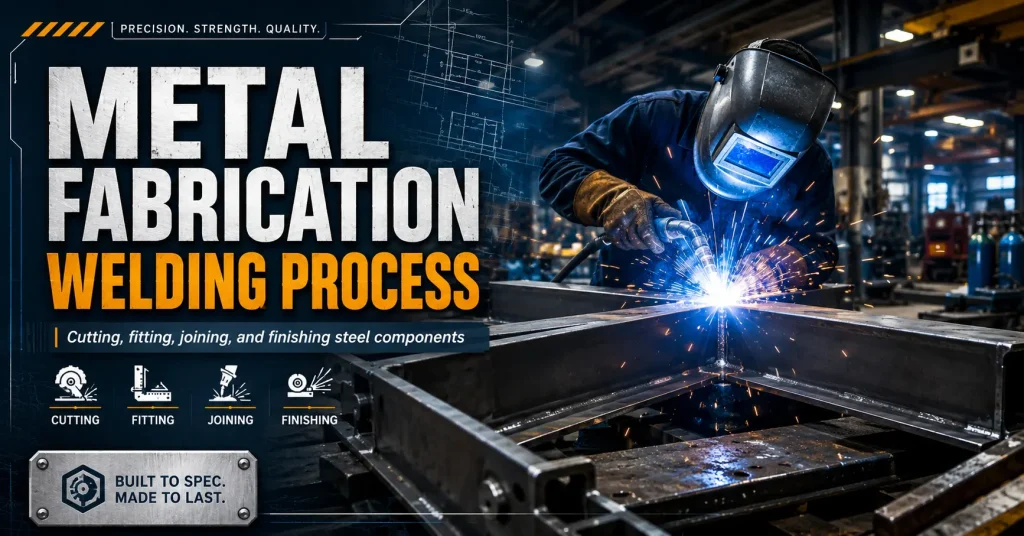
A typical fabrication and welding project moves through eight distinct stages. Each one builds on the last, and skipping or rushing any single stage is usually where quality problems start later down the line. Here is what actually happens at each step, and why it matters.
1. Design and Engineering
Every project starts on paper, or more accurately, on a screen. Engineers and fabricators work together to create a detailed drawing or a 3D CAD model, often using software like SolidWorks or AutoCAD. This is not just a rough sketch. It is a precise technical document that defines:
- Exact dimensions and tolerances for every part
- The material grade and thickness required
- Where and how each weld should be placed
- Joint types and any load-bearing requirements
This stage also involves reviewing industry standards, such as AWS welding codes or ASME requirements, to make sure the design will actually pass inspection later. A mistake caught on a drawing costs a few minutes to fix. The same mistake caught after the part is cut, formed, and half welded can cost hours of rework and wasted material. This is why experienced fabricators spend real time here rather than rushing to the shop floor.
2. Material Selection
Once the design is locked in, the right raw material has to be sourced. This decision shapes everything that follows, including which welding process will work, how the part will perform, and what it will cost. Common choices include:
- Carbon steel: Strong, affordable, and widely used for structural frameworks, beams, and general industrial parts.
- Stainless steel: Resists corrosion and rust, making it the go-to choice for food equipment, medical devices, and marine applications.
- Aluminum: Lightweight and easy to machine, favored in automotive, aerospace, and transport applications where weight matters.
- Alloy steels: Blended with elements like chromium or molybdenum for extra strength, hardness, or heat resistance in demanding environments.
Fabricators also check the material’s certification documents at this stage, confirming it matches the exact grade specified in the design, since substituting even a similar-looking metal can cause welding or performance problems later.
3. Cutting
With material in hand, the next step is cutting it down to the sizes the design calls for. Several methods are available, and the right one depends on the material, thickness, and how precise the cut needs to be:
- Laser cutting: Extremely precise, ideal for intricate shapes and thinner materials.
- Plasma cutting: Fast and cost-effective, well suited to thicker metals.
- Waterjet cutting: Uses high-pressure water mixed with abrasives, useful when heat needs to be avoided entirely to prevent warping.
- Sawing: A simple, economical option for straight cuts on standard stock.
Automated cutting systems have become common in modern shops because they hold tighter tolerances and reduce material waste compared to manual cutting, which matters directly for both part quality and project cost.
4. Forming
Flat metal rarely stays flat. In the forming stage, sheets and plates are bent, rolled, or stamped into the three-dimensional shapes the design requires. This typically involves:
- Press brakes, which create precise bends and angles, from a simple 90-degree fold to complex multi-angle profiles
- Rollers, which curve flat plate into cylinders, used for tanks, pipes, and pressure vessels
- Stamping, which uses a die to press shapes or features into the metal in a single motion
Skilled machine setters make constant small adjustments here, since even a slightly inaccurate bend angle can throw off how parts fit together during welding later on.
5. Edge Preparation
Before any welding begins, the edges that will be joined often need to be prepared, especially on thicker material. This step is easy to overlook, but it has a direct impact on weld strength. Edge preparation typically includes:
- Beveling, cutting an angled edge so the weld can penetrate deeper into the joint
- Grinding, smoothing rough or oxidized surfaces so the weld bonds cleanly
- Cleaning, removing oil, rust, mill scale, or other contaminants that would otherwise weaken the weld
Skipping proper edge preparation on heavy sections is one of the most common, and most preventable, causes of weak or defective welds in the entire process.
6. Welding
This is the step where individual pieces of metal become one solid, structural whole. A welder applies heat, and sometimes pressure, to fuse the prepared joints together, often adding filler material to strengthen the bond. The right welding method depends on several factors working together:
- The type and thickness of the metal
- Whether the weld needs to be cosmetic or purely structural
- The working environment, such as a controlled shop versus an outdoor field repair
- Production volume and how fast the welds need to be completed
We cover exactly how MIG, TIG, Stick, and Flux-Cored welding differ in the next section, since choosing the wrong method here is one of the biggest factors behind both cost overruns and quality issues.
7. Finishing
Once welding is complete, the part still needs work before it is ready to leave the shop. Finishing protects the metal and gives it its final appearance. Common finishing steps include:
- Grinding, smoothing down weld seams for a cleaner look and better fit with other components
- Sandblasting, removing scale, rust, or residue from the surface
- Painting or powder coating, adding a protective, corrosion-resistant layer in the desired color
- Galvanizing, coating the metal in zinc for long-term protection against rust, especially for outdoor or structural applications
The right finish depends on where the part will end up. A part destined for outdoor structural use needs far more corrosion protection than an indoor component that will never see moisture.
8. Inspection and Quality Control
The final stage confirms the part actually meets the specifications set out at the very beginning. This is not a quick glance before shipping. It typically includes:
- Visual inspection, checking for surface defects, spatter, or obvious weld irregularities
- Dimensional checks, confirming the finished part matches the original drawing’s tolerances
- Ultrasonic testing, using sound waves to detect hidden voids or cracks inside the weld that are invisible to the eye
- X-ray or radiographic inspection, used on critical welds, such as pressure vessels, where internal defects could lead to failure
For projects governed by codes like ASME or aerospace standards, this stage also includes generating documentation that proves the part was welded and inspected according to the required procedures, paperwork that matters just as much as the weld itself if the part is ever audited or needs repair down the line.
The Main Welding Methods Used in Metal Fabrication
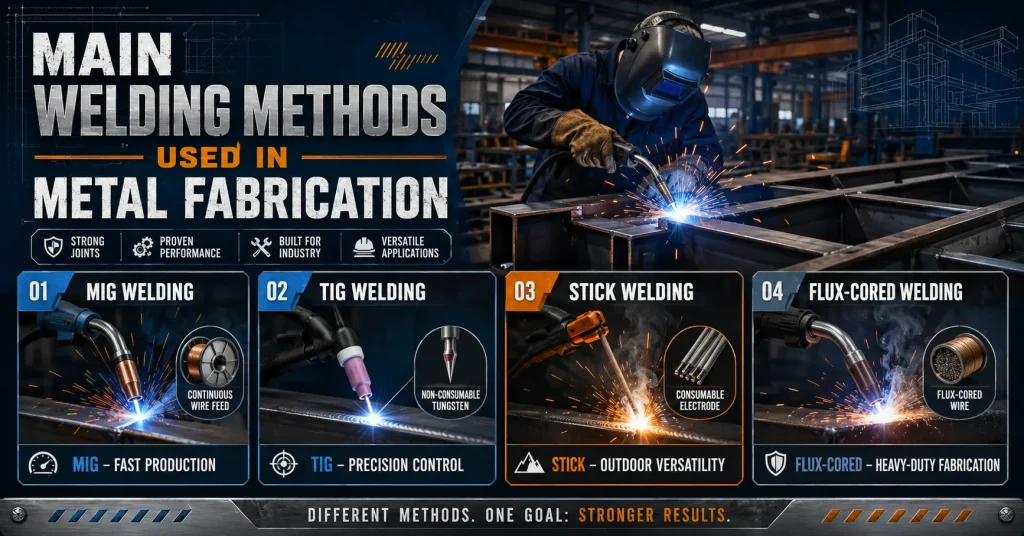
Not every welding method suits every job. Here is how the most common ones compare.
| Method | Also Known As | Best For | Trade-Off |
|---|---|---|---|
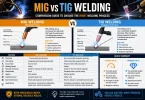
| MIG | GMAW, Gas Metal Arc Welding | Carbon steel, thicker materials, high-volume production | Faster but less precise than TIG |
| TIG | GTAW, Gas Tungsten Arc Welding | Thin materials, stainless steel, aluminum, cosmetic welds | Slower and requires more skill |
| Stick | SMAW, Shielded Metal Arc Welding | Field repairs, outdoor work, thicker sections | Less clean finish, more spatter |
| Flux-Cored | FCAW | Thick materials, structural and heavy-duty work | Higher deposition rate but rougher appearance |
A quick way to think about it: MIG is the workhorse for speed and volume, TIG is the specialist for precision and appearance, Stick is the field-ready option when a shielding gas supply is not practical, and Flux-Cored is the heavy-lifter for thick structural steel.
Beyond these four, more specialized processes exist too. Submerged arc welding handles thick steel sections in pressure vessels and pipelines. Laser and electron beam welding are used in aerospace and electronics, where a very small heat-affected zone matters. These are worth knowing about even if your project will not use them, since a fabricator’s ability to offer them signals broader capability.
What Determines Weld Quality?
A weld can look fine on the surface and still fail under load. Quality depends on several interacting factors:
- Heat input: Too much heat weakens the surrounding metal in what is called the heat-affected zone. Too little heat causes incomplete fusion.
- Filler material match: The filler metal must be compatible with the base metal’s composition and strength grade.
- Joint preparation: Clean, properly beveled edges produce stronger, more consistent welds.
- Welder skill and certification: Certified welders, typically qualified under American Welding Society (AWS) standards, follow documented procedures that reduce variability.
- Environmental control: Wind, moisture, and contamination can all compromise a weld, which is why shielding gas coverage and clean working conditions matter.
Common Weld Defects and What Causes Them
This is the part most competitor articles skip entirely, yet it is exactly what buyers and quality managers want to know before signing off on a vendor.
| Defect | What It Looks Like | Common Cause |
|---|---|---|
| Porosity | Small holes or bubbles in the weld | Contamination, moisture, or lost shielding gas coverage |
| Undercutting | A groove melted into the base metal next to the weld | Excess heat or incorrect welding angle |
| Incomplete fusion | Weld metal that did not fully bond to the base metal | Insufficient heat or poor joint access |
| Cracking | Visible splits in the weld or heat-affected zone | Rapid cooling, high-carbon steel, or poor preheating |
| Spatter | Small droplets scattered around the weld | Incorrect voltage or wire feed settings |
Asking a potential fabricator how they detect and prevent these issues, rather than just asking if they weld a certain material, tells you far more about their actual process control.
What Drives the Cost of Metal Fabrication Welding
Cost is one of the least explained parts of this topic, so here is a straightforward breakdown of what actually moves the price:
- Material type and thickness: Stainless steel and aluminum generally cost more than carbon steel, and thicker sections require more time and higher amperage.
- Complexity of design: More cuts, bends, and welds mean more labor hours.
- Welding method required: TIG welding takes longer than MIG welding for the same joint length, which affects labor cost.
- Volume: Per-unit cost drops significantly at higher production volumes due to setup efficiency.
- Finishing requirements: Powder coating, galvanizing, or polished finishes add cost beyond the raw welding work.
- Certification requirements: Projects requiring ASME code welds or third-party inspection cost more due to documentation and testing.
A shop that cannot explain which of these factors is driving your quote is usually one that has not fully scoped the job.
Industries That Depend on Metal Fabrication Welding
Metal fabrication welding shows up across a wide range of sectors:
- Construction, for structural steel frameworks, beams, and staircases
- Automotive, for chassis components and exhaust systems
- Aerospace, for precision, lightweight structural parts
- Oil and gas, for pressure vessels, tanks, and pipelines
- Food and pharmaceutical, for sanitary stainless steel equipment
- Energy, for battery enclosures and renewable infrastructure
The specific welding method and material grade shift depending on the industry’s demands. A food-grade tank needs clean TIG welds on stainless steel, while a structural beam is more likely to use MIG or flux-cored welding on carbon steel.
Standards and Certifications Worth Knowing
If you are hiring a fabricator, these terms are worth recognizing:
- AWS (American Welding Society): Certifies individual welders and sets widely used welding codes.
- ISO 9001:2015: A general quality management certification, indicating documented, repeatable processes.
- ASME Code: Required for pressure vessels and certain piping systems, governing design and weld procedures.
- AS9100D: An aerospace-specific quality standard, layered on top of ISO 9001.
A shop holding relevant certifications for your industry is not just a formality. It usually means their welders follow documented procedures and their welds are traceable, which matters if something ever needs to be inspected or repaired later.
How to Choose a Metal Fabrication and Welding Shop
A short, practical checklist:
- Ask which welding processes they offer in-house, not just which ones they can subcontract
- Confirm welder certifications relevant to your material and industry
- Ask how they inspect welds, visually only, or with methods like ultrasonic or X-ray testing
- Request examples of past work in your material type and thickness range
- Clarify whether design, cutting, forming, and finishing are all handled under one roof, which reduces handoff errors and lead time
- Ask how they handle non-conforming parts or failed welds, since every shop has them occasionally, and how they handle it tells you about their quality culture
Shops that do both fabrication and welding in-house tend to have fewer handoff delays and clearer accountability than those that outsource welding to a separate vendor.
Frequently Asked Questions
Is welding the same as fabrication?
No. Welding is one joining technique. Fabrication is the entire process of turning raw metal into a finished product, which includes design, cutting, forming, welding, and finishing.
Which welding method is strongest?
Strength depends more on proper technique, joint design, and material match than on the method itself. TIG, MIG, and Stick can all produce full-strength welds when done correctly for the right application.
How thick can MIG welding handle?
MIG welding handles a wide range, from thin sheet metal up to thick structural sections, depending on the machine’s amperage and the welder’s technique.
Do all fabricators offer TIG and MIG welding?
Not always. Some shops specialize in one method or focus on specific materials. It is worth confirming which processes a shop offers in-house before assuming they cover everything.
Why does my quote vary so much between fabricators for the same part?
Differences usually come down to material sourcing, welding method assumptions, finishing requirements, and whether the shop is pricing in certification or inspection costs. Ask for a breakdown if a quote seems unclear.
Final Thoughts
Metal fabrication welding is not a single skill. It is a coordinated process where design, material choice, cutting, forming, and welding all have to work together to produce a part that performs reliably. Understanding the stages, the welding methods, and the quality factors involved puts you in a much stronger position, whether you are hiring a fabricator, managing a project, or simply trying to understand how the metal structures around you came to exist.
The shops that consistently deliver strong results are the ones that treat every stage, not just the weld itself, with the same level of care. That is the real difference between a part that lasts decades and one that fails early.
You May Also Like It:
CNC Machining Tolerances: The Complete Expert Guide
MIG vs TIG Welding: Complete Guide to Differences and Procedures