
If you have been searching for information on ZNOG stock, you are not alone. Zion Oil & Gas has attracted significant attention from retail investors drawn to its unique story a faith-driven American company drilling for oil and gas in the biblical heartland of Israel. But beyond the compelling narrative, what are the real facts behind ZNOG stock? What is the current Zion Oil stock price, what are the risks, and is it worth buying in 2026? This guide covers everything you need to know.
What Is ZNOG Stock?
ZNOG is the ticker symbol for Zion Oil & Gas, Inc., a Dallas, Texas-based oil and gas exploration company. The stock trades on the OTC Markets under the symbol OTCMKTS: ZNOG, specifically on the OTCQX marketplace, which is the highest tier of OTC trading in the United States. A warrant associated with the stock trades under the symbol ZNOGW.
Zion Oil & Gas was incorporated in Florida on April 6, 2000, reincorporated in Delaware in 2003, and most recently re-domesticated to Texas following shareholder approval on June 4, 2025. The company completed its initial public offering (IPO) in January 2007.
What Does Zion Oil & Gas Do?
Zion Oil & Gas is a pure-play oil and gas exploration company operating entirely in Israel. The company holds the New Megiddo Valleys License 434 (NMVL 434), an exploration license covering approximately 75,000 acres or 302 square kilometers in the Megiddo and Jezreel Valley region of northern Israel. The company’s exploration focus is on unlocking hydrocarbon resources in this historically significant area, which the company believes possesses the geological ingredients of an active petroleum system.
The company owns its own drilling subsidiary, Zion Drilling, Inc., and operates its own drilling rig most recently recommissioned and renamed the “JB-1” in June 2026 in honor of Zion’s founder John Brown.
ZNOG Stock Price: Where Does It Trade Today?
Current ZNOG Stock Price Overview
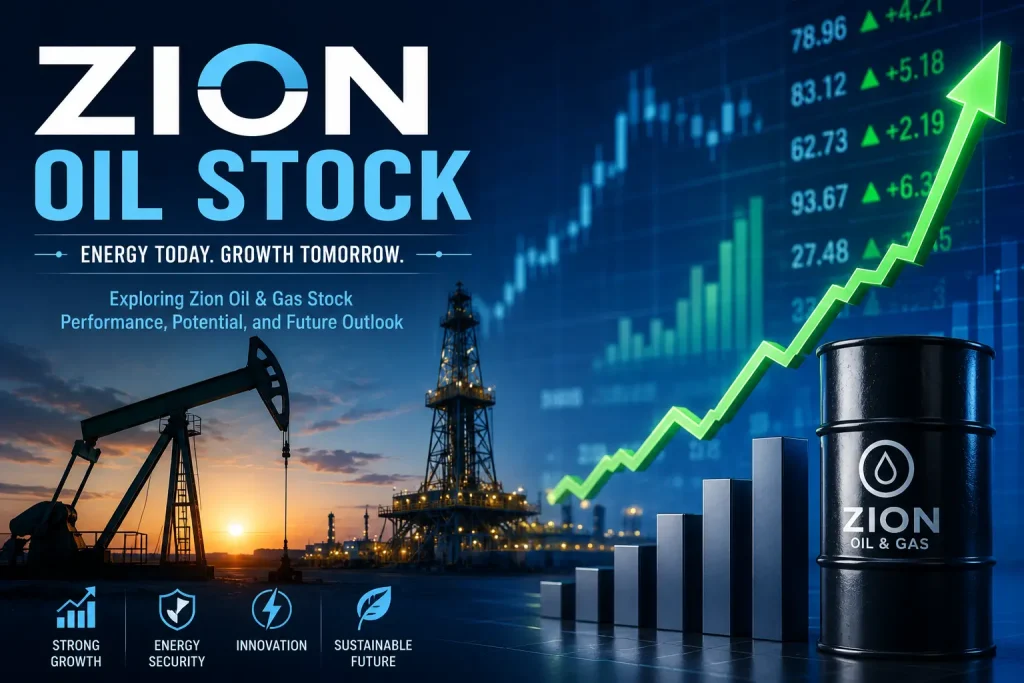
ZNOG stock is a penny stock trading on the OTC Markets. As of mid-June 2026, the Zion Oil stock price was approximately $0.50 per share. The stock has experienced significant volatility over the past year, with a 52-week high of approximately $0.70 and a 52-week low of approximately $0.15.
The market capitalization of Zion Oil & Gas as of June 2026 stood at approximately $590 million a notable figure for a pre-revenue exploration company, driven largely by the very large number of shares outstanding. As of March 13, 2026, Zion had approximately 1.18 billion shares outstanding.
Historical ZNOG Stock Price Performance
ZNOG stock has followed a pattern common to speculative exploration companies sharp rallies driven by positive drilling news and operational updates, followed by periods of decline as investors reassess the timeline to commercial production. The stock surged significantly in early 2025 when the company announced the recommencement of operations on its MJ-01 well and again in May 2025 when initial gas flowback was observed at the surface.
The stock’s high volatility averaging approximately 9.5% daily movement at certain points in 2026 reflects both the binary nature of exploration outcomes and the retail-investor-driven trading activity that characterizes many OTC-listed stocks.
How to Buy ZNOG Stock
ZNOG stock can be purchased through virtually any U.S. brokerage account that supports OTC trading. Major platforms including Fidelity, Charles Schwab, TD Ameritrade, E*TRADE, and Robinhood generally allow trading in OTCQX-listed securities. Investors should confirm their brokerage’s OTC trading policies before attempting to purchase shares, as some platforms may restrict trading in lower-priced OTC securities.
OTCMKTS: ZNOG Understanding How Zion Oil Stock Trades
What Does OTCMKTS: ZNOG Mean?
When you see the designation OTCMKTS: ZNOG, it means the stock trades on the OTC Markets a decentralized marketplace for securities not listed on major exchanges like the NYSE or NASDAQ. OTCMKTS is a common prefix used to indicate OTC-traded stocks, particularly on financial platforms and data aggregators.
What Is the OTCQX Marketplace?
Zion Oil & Gas trades specifically on the OTCQX tier, the highest and most prestigious level of the OTC Markets. OTCQX-listed companies meet higher financial standards and corporate governance requirements than companies on the lower OTC Bulletin Board (OTCBB) or Pink Sheets tiers. Trading on OTCQX provides greater visibility and credibility than trading on standard pink sheets, though it still carries the liquidity and volatility risks typical of OTC securities.
Is OTCMKTS: ZNOG at Risk of Delisting?
As of mid-2026, there are no public indications that Zion Oil & Gas faces delisting from OTC Markets. Recent SEC filings, press releases, and news announcements continue to reference ZNOG as an active trading symbol. However, investors should monitor the company’s compliance with OTCQX standards, particularly if the company’s financial position deteriorates.
Zion Oil Stock: Company Background and Mission
The Faith-Based Foundation of Zion Oil & Gas
Zion Oil & Gas has a story that is unusual in the energy industry. The company was founded on a belief, rooted in biblical scripture, that significant oil and gas resources exist in the land of Israel and that discovering them would bring economic benefit to both Israel and the Jewish people. This mission has attracted a base of loyal investors, many of whom are motivated by both financial and faith-based reasons.
The company’s founder, John Brown, believed that biblical passages in Genesis, Deuteronomy, and other texts pointed to oil wealth beneath the ancient lands of the tribe of Asher an area corresponding roughly to northern Israel today. This foundational belief continues to shape the company’s culture and investor communications.
Zion Oil & Gas as a Business
While the company’s mission is faith-driven, it operates as a publicly traded corporation subject to all standard SEC disclosure requirements and financial reporting obligations. It has conducted multiple rounds of capital raising, maintains a board of directors, files annual 10-K reports, and pursues commercially viable oil and gas exploration using modern drilling technology.
Zion Oil & Gas Operations: MJ-01, MJ-02, and the Megiddo Valleys License
Exploration License 434: The Legal Foundation
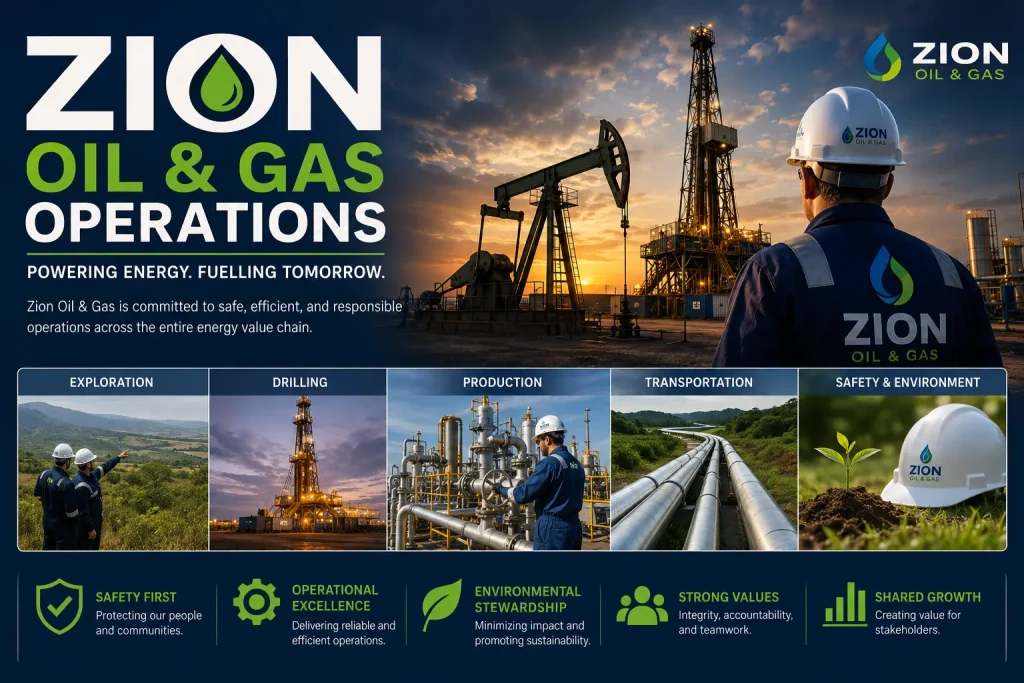
The New Megiddo Valleys License 434 is the legal foundation of Zion Oil & Gas’s operations. Approved by the Israel Ministry of Energy on September 14, 2023, this license authorizes oil and gas exploration on approximately 75,000 acres in northern Israel. The license is valid for three years through September 13, 2026 with four potential one-year extensions, giving the company a possible total term through September 2030. The approaching September 2026 initial expiry is a key near-term milestone for ZNOG investors to watch.
The MJ-01 Well: Recompletion and Gas Flowback
The Megiddo-Jezreel 1 well, known as MJ-01, is Zion’s primary operational focus. After being warm-stacked in 2024, the company resumed operations in February 2025 when its rig crew arrived in Israel. The recompletion project involving drilling out a temporary plug, perforating targeted zones, and conducting stimulation operations progressed through 2025.
In May 2025, Zion announced a meaningful milestone: gas was observed at the surface during initial flowback testing of the MJ-01 well. The company described the targeted perforation zone and stimulation operations as successful. This result provided technical validation that hydrocarbons exist in the targeted reservoir zones though it did not yet confirm commercial viability or production rates.
The MJ-02 Well: New Campaign Beginning
In June 2026, Zion announced that its next operational campaign would begin from the MJ-02 well, located on the same pad as MJ-01 approximately 7.5 meters away on the surface and around 300 meters offset at depth. Management explained that beginning from MJ-02 allows the company to start with larger casing, use larger-diameter tools, and execute a two-stage drilling plan that provides greater flexibility for downhole contingencies. Both wellbores target the same geological zone.
The company’s drilling rig was recommissioned and renamed the JB-1 in June 2026 in honor of its founder John Brown, marking the beginning of this new drilling phase.
Exploration Spending and Operations
Zion’s exploration spending in 2025 totaled approximately $7.13 million, primarily covering drilling and related operations. Logistics remain challenging in Israel’s onshore market, most services and equipment must be imported, adding time and cost. Equipment for recent operations has been sourced globally from India, Romania, Germany, the Netherlands, the UAE, the United States, and Tanzania.
ZNOG Stock Financial Analysis
Revenue and Losses
Zion Oil & Gas is a pre-revenue exploration company. It has not generated any commercial oil or gas sales. The company recorded consecutive net losses of approximately $7.63 million in 2025 and $7.34 million in 2024. These losses are covered by ongoing capital raising activities rather than by operating cash flow.
The company’s independent auditors have issued a going-concern paragraph in their audit report a formal warning that the company’s ability to continue operating depends on its ability to raise additional capital. This is a standard feature of pre-revenue exploration companies but is an important risk flag for investors.
How Zion Oil & Gas Raises Capital
Zion’s primary funding mechanism is its Dividend Reinvestment and Stock Purchase Plan (DRIP). Through this plan, investors can purchase common stock and warrants directly from the company in structured unit programs. In 2025, the company raised approximately $21.48 million through this plan, and in 2024 it raised approximately $16.26 million.
A significant concentration risk exists within this funding model. According to the company’s 10-K filing for 2025, approximately 60% of the 2025 capital raised came from just two participants. This concentration creates a fragile funding base if either of these key investors reduces their participation, the company’s ability to fund operations could be severely impacted.
Shares Outstanding and Dilution
With approximately 1.18 billion shares outstanding as of March 2026, Zion Oil & Gas has an extremely large share count for a pre-revenue company. This is the result of years of stock-based capital raising. Continued capital raises through unit programs will likely add further shares, creating ongoing dilution risk for existing shareholders. Investors in ZNOG stock should factor dilution into any long-term investment thesis.
Key Risks of Investing in ZNOG Stock
Zion Oil & Gas is a high-risk, speculative investment. The following risks are material and should be carefully considered by any investor.
Exploration Risk: No Guarantee of Commercial Discovery
The most fundamental risk in ZNOG stock is exploration failure. Oil and gas exploration is inherently uncertain. Even with positive flowback results from MJ-01, there is no guarantee that the reservoir will produce hydrocarbons at commercially viable rates or volumes. The company has been drilling in Israel for over two decades without a commercial discovery.
Geopolitical Risk: Operating in a War Zone
Zion Oil & Gas operates exclusively in Israel, a country facing significant regional conflict. The company has acknowledged substantial geopolitical risks tied to multiple ongoing regional wars, including the conflict that began following the events of October 7, 2023. While the company has reported that its operations site and rig have remained secure, the geopolitical environment creates unpredictable risk for operations, logistics, personnel safety, and investor sentiment.
License Expiry Risk
Zion’s current exploration license expires on September 13, 2026. While extensions of up to four years are possible, the Israel Ministry of Energy’s decisions on license extensions are not guaranteed. A failure to extend the license would effectively end the company’s ability to operate in its target area.
Going-Concern Risk
As noted above, Zion’s auditors have issued a going-concern warning. The company has no revenue, ongoing losses, and depends entirely on external capital. If capital raising proves insufficient, the company could face severe operational difficulties.
Dilution Risk
Continued share issuances through unit programs and potential future equity offerings will dilute existing shareholders. With over 1 billion shares already outstanding, further dilution could suppress the stock price even if exploration results are positive.
Funding Concentration Risk
With approximately 60% of 2025 capital coming from just two investors, the company’s financial stability is highly dependent on the continued participation of a very small number of participants.
ZNOG Stock: Bull Case and Bear Case
The Bull Case for Zion Oil Stock
The bull case for ZNOG rests on a binary outcome: a commercial oil or gas discovery in Israel. If Zion successfully proves commercially viable hydrocarbon flows from MJ-01, MJ-02, or future wells, the upside for the stock could be enormous. Israel has no significant domestic oil production and imports the majority of its energy needs. A commercial discovery in the Megiddo Valley would be a landmark event with massive geopolitical and economic significance.
Technical analysis of the stock in mid-2026 suggested a potential 3-month upside of approximately 58%, with some analysts projecting a trading range of $0.79 to $1.05 over that period under bullish scenarios. The gas observed during MJ-01 flowback testing provides meaningful technical validation that hydrocarbons exist in the target zone. The company’s new MJ-02 campaign, using improved drilling techniques and larger equipment, represents a serious attempt to unlock those resources.
The Bear Case for ZNOG Stock
The bear case is equally straightforward. Zion Oil & Gas has been exploring in Israel for over two decades without commercial success. The company has no revenue, consecutive losses, a going-concern audit qualification, and a fragile funding base concentrated in two investors. The stock has over 1 billion shares outstanding, creating significant dilution pressure. The license expires in September 2026, adding time pressure. And the geopolitical environment in the Middle East creates unpredictable operational and financial risk.
For investors who believe oil and gas exploration in Israel is unlikely to succeed, ZNOG offers little fundamental support for its current valuation.
ZNOG Stock vs. Other OTC Energy Exploration Stocks
ZNOG belongs to a category of speculative, pre-revenue OTC energy exploration stocks a category that includes companies like Trio Petroleum Corp (TPET) and Foothills Exploration (FTXP). These stocks share common characteristics: high risk, high volatility, no commercial revenue, dependence on external capital, and stock prices driven largely by news flow and sentiment rather than fundamental earnings.
Compared to its peers, Zion Oil & Gas stands out for its long operational history, its dedicated and loyal investor base, its ownership of its own drilling rig, and the unique geopolitical significance of its exploration target. However, it also stands out for its very large share count and its unusually concentrated funding base.
Investors comparing ZNOG to other OTC energy stocks should evaluate each company’s specific exploration prospects, financial stability, and management track record independently.
How to Evaluate ZNOG Stock: Key Metrics to Watch
For investors tracking Zion Oil stock, the following metrics and milestones are most important to monitor.
Operational Milestones
Watch for updates on MJ-02 drilling progress, including depth reached, any hydrocarbon shows encountered, stimulation operations, and flow testing results. These operational updates are the primary catalyst for ZNOG stock price movements.
License Renewal
The renewal or extension of Exploration License 434 beyond September 2026 is a critical near-term catalyst. A confirmed extension would reduce one of the most immediate existential risks facing the company.
Capital Raising Activity
Monitor quarterly reports and press releases for updates on unit program progress, total capital raised, and the concentration of funding participants. Any signs of weakening capital raising activity should be treated as a warning sign.
Shares Outstanding
Track the growth in shares outstanding as a measure of dilution. A rapidly growing share count may limit stock price appreciation even in positive scenarios.
Cash Position
Given the company’s pre-revenue status, its cash balance and monthly burn rate are critical indicators of how long it can operate without additional capital raises.
Frequently Asked Questions About ZNOG Stock
What exchange does ZNOG trade on?
ZNOG trades on the OTC Markets, specifically on the OTCQX tier, which is the highest level of OTC trading. It is not listed on the NYSE or NASDAQ.
Is ZNOG a good stock to buy?
ZNOG is a high-risk, speculative exploration stock. It may suit investors with a high risk tolerance who believe in the company’s exploration thesis and are prepared for the possibility of total loss. It is not suitable for conservative investors or those who cannot afford to lose their investment.
What is the ZNOG stock price today?
ZNOG stock prices change daily. As of mid-June 2026, the stock was trading near $0.50 per share. For real-time pricing, check financial platforms such as Yahoo Finance, Google Finance, or OTC Markets directly.
Why is Zion Oil & Gas exploring in Israel?
The company was founded on a faith-based belief that biblical scripture points to significant oil and gas resources in Israel. The company’s founder believed passages in Genesis and Deuteronomy indicated oil wealth beneath the ancient tribal lands of northern Israel.
Does Zion Oil & Gas produce any oil or gas?
No. As of mid-2026, Zion Oil & Gas is a pre-revenue exploration company. It has observed gas during flowback testing but has not commenced commercial production or sales.
What is the ticker symbol for Zion Oil & Gas warrants?
Zion Oil & Gas warrants trade under the symbol ZNOGW on OTC Markets.
Conclusion: Is ZNOG Stock Right for You?
ZNOG stock is not an investment for the faint of heart. Zion Oil & Gas is a pre-revenue, pre-production exploration company operating in a geopolitically volatile region, funded by a small and concentrated investor base, and carrying an auditor-issued going-concern warning. The company has been pursuing oil and gas in Israel for more than two decades without a commercial discovery.
At the same time, the technical results from MJ-01 including gas observed at surface during flowback provide meaningful evidence that hydrocarbons exist in the target zone. The new MJ-02 campaign beginning in 2026 represents a more technologically sophisticated attempt to unlock those resources. And if a commercial discovery is ever made, the implications for both the company and the stock price would be transformative.
ZNOG stock sits squarely in the high-risk, high-reward category of speculative investments. If you invest, do so with money you can afford to lose entirely, size your position appropriately, and track the company’s operational progress closely. For investors who understand and accept these risks, Zion Oil stock offers a genuinely unique story one that blends ancient history, modern geology, and the eternal investor hope for a discovery that changes everything.
You May Also Like It:
CNC Machining Tolerances: The Complete Expert Guide
MIG vs TIG Welding: Complete Guide to Differences and Procedures